Search Dental Tribune

Models produced with the Formlabs Automation Ecosystem. (All images: Formlabs)

Thu. 22. May 2025

save

In recent years, the field of dentistry has undergone a profound transformation with the widespread adoption of digital technologies, particularly in the realm of 3D printing. This shift from traditional methods to digital workflows has not only revolutionised the way dental professionals approach patient care but also opened up a world of possibilities for improved treatment outcomes and enhanced patient experiences.

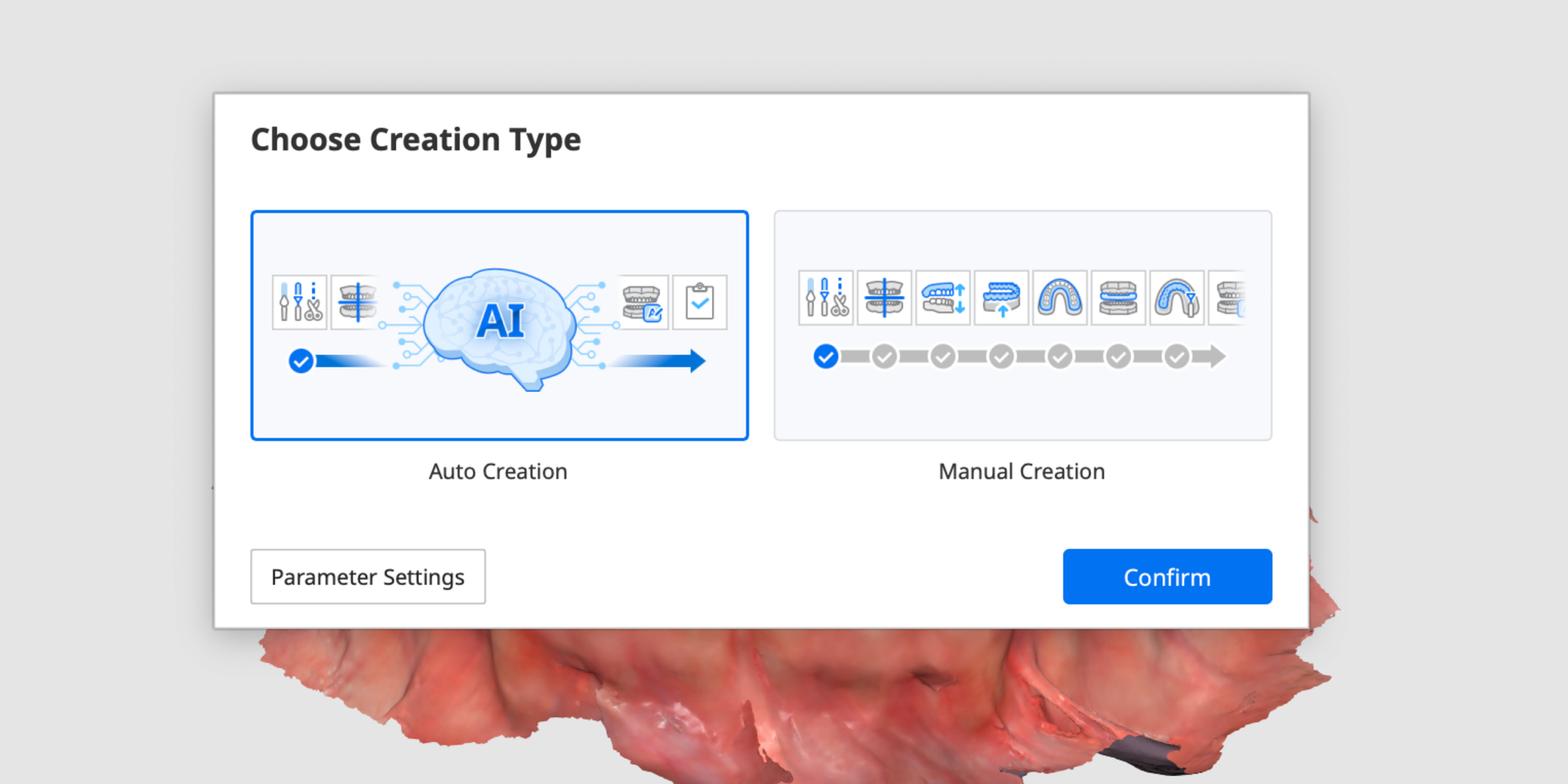
Medit Link with articial intelligence options for design.

Medit Link with articial intelligence options for design.

The integration of 3D-printing technology into dental practices and laboratories has ushered in a new era of innovation, offering solutions to longstanding challenges and streamlining workflows in unprecedented ways. CAD, printing preparation, post-processing, material selection—every aspect of the dental 3D-printing process has been enhanced by advancements in technology. Nevertheless, there is still room for further innovation and improvements.

In this article, we will explore four major trends driving progress in the field of dental 3D printing. By embracing these advancements and leveraging the power of technology, dental professionals can enhance efficiency, precision and, ultimately, the quality of care they provide to patients.

AI and integrations: Drivers of efficiency from CAD to 3D printing

Artificial intelligence (AI) is becoming increasingly popular in the dental field, particularly in diagnostics, but AI is also having a great impact on design. By being integrated with CAD software, it is revolutionising the design process by providing intelligent assistance to dental professionals. AI algorithms assist in intricate part design, significantly reducing the time invested in this step of the workflow. As examples, Medit Link and 3Shape employ AI to streamline the CAD process for several applications, offering automated suggestions to enhance the final design’s quality.

Moreover, integrations from CAD to 3D-printing preparation software streamline the transition from design to printing, reducing human intervention and ensuring consistency in outcomes. Specifically, having the option of exporting STLs directly into the printing preparation software from the CAD software saves dental professionals significant time.

Automation: Streamlining workflow processes and increasing production capacity with existing tools

Automation has revolutionised manufacturing processes, particularly with the advent of 3D printing, leading to enhanced reproducibility and production capabilities. However, as demand surges, especially for larger dental laboratories and clear aligner manufacturers, there comes a point where production capacity reaches its limits owing to the constraints of existing tools and systems.

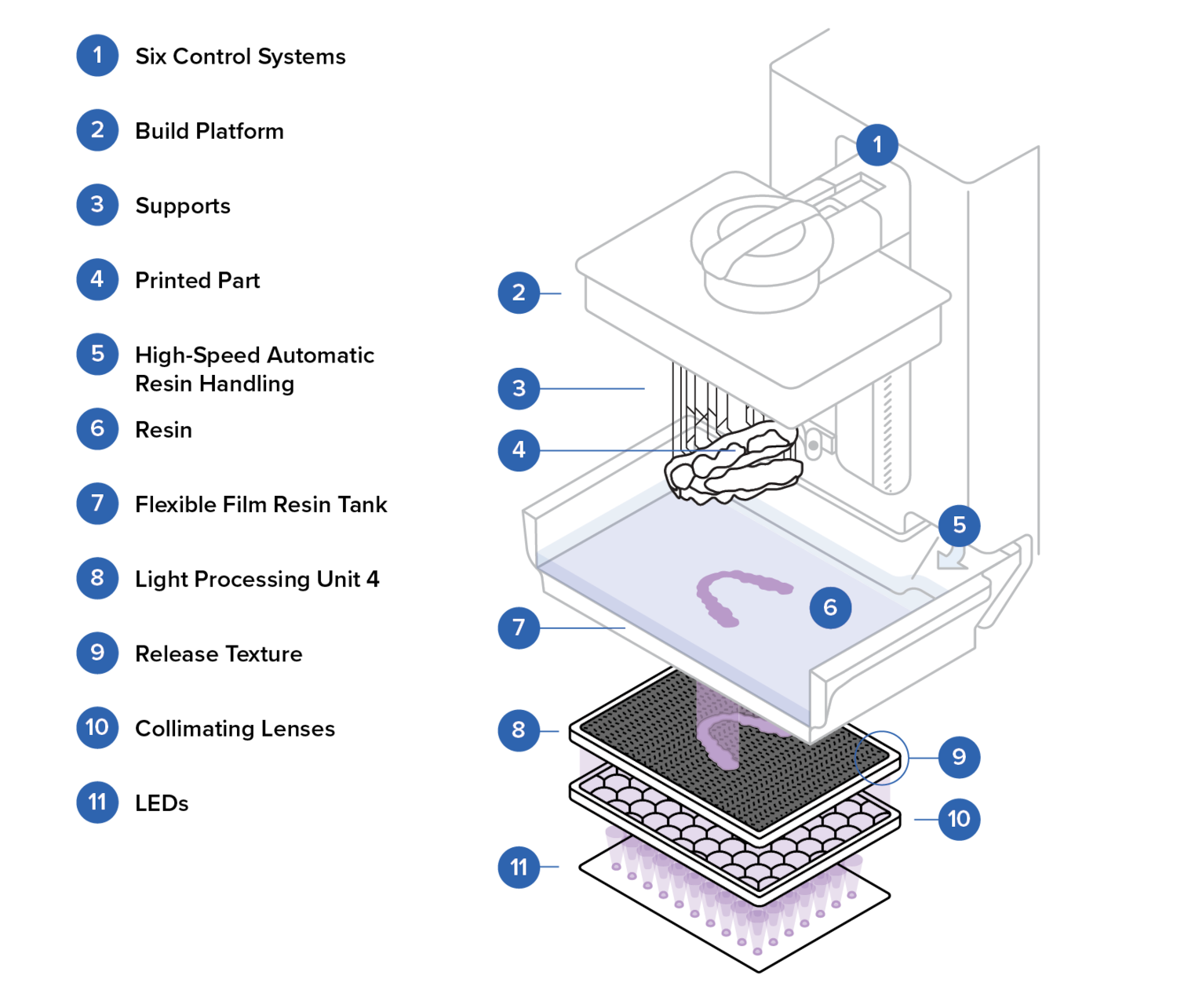
Components of the Form 4B printer powered by Low Force Display.

Components of the Form 4B printer powered by Low Force Display.

For instance, when aiming to scale up production without needing to add more hardware units, there are typically two avenues to explore: optimisation of the existing workflow efficiency or extension of production hours (such as introducing night shifts or weekend operations). The first option is preferable and where innovations are happening. Upon closer examination of the existing 3D-printing workflow, we can identify four key steps:

  • preparation of parts for printing, involving part set-up orientation and material and layer height selection;
  • transmission of prepared parts to the printers, involving allocation of print jobs to the specific printers;
  • removal of the printed parts from the build platform; and
  • post-processing tasks, such as washing and polymerisation of the printed parts.

Enhancing efficiency and throughput in each of these steps is crucial for unlocking greater production capacity and meeting escalating demand. Let us analyse some examples.

Printing preparation simplified with automatic presets
The printing set-up stage, often considered a complex step for novice users, is streamlined with tools like Formlabs’ PreForm Dental. These solutions automate preset creation, minimising errors and reducing the time invested in printing preparation. For example, PreForm Dental’s automatic preset creation feature allows users to preconfigure their printing settings by already configuring part orientation, printing setting, and material and layer height selection. Once this preset has been created, files can be dragged and dropped and automatically set up based on that preset.

Enhanced production capacity without extra human resources
Automation extends to print job allocation and post-processing tasks, maximising production capacity and efficiency and reducing the dependence on manual intervention. Tools like Formlabs’ Fleet Control and Form Auto automate print job management and part removal. With Fleet Control, files are uploaded to a general queue and automatically allocated to the next free unit set up with the material that matches that print job. This eliminates the need to manually allocate print jobs to specific printers. As for automatic part removal, there are several hardware solutions on the market that consist of hardware extension units that automatically remove parts from the build platform. One example is Form Auto, which is an add-on to Form 3B+ printers and automates part removal from Build Platform 2 (a build platform for stereolithography printers) and reinsertion, allowing dental professionals to achieve unsupervised production during non-operating hours with existing hardware units. For example, in a standard working day, 64 models can be printed with a Form 3B+, but with automation, that number skyrockets to 176 models per day.

Hardware and software optimisations: Faster steps and increased accuracy with new tools

Manufacturers continuously strive to optimise existing hardware, aiming to enhance speed and efficiency in the 3D-printing process. Software updates such as Formlabs’ Fast Arch Printing and innovations in hardware like the Form 4B printer and Formlabs’ Fast Cure solutions expedite printing and post-processing workflows, further improving overall efficiency and productivity.

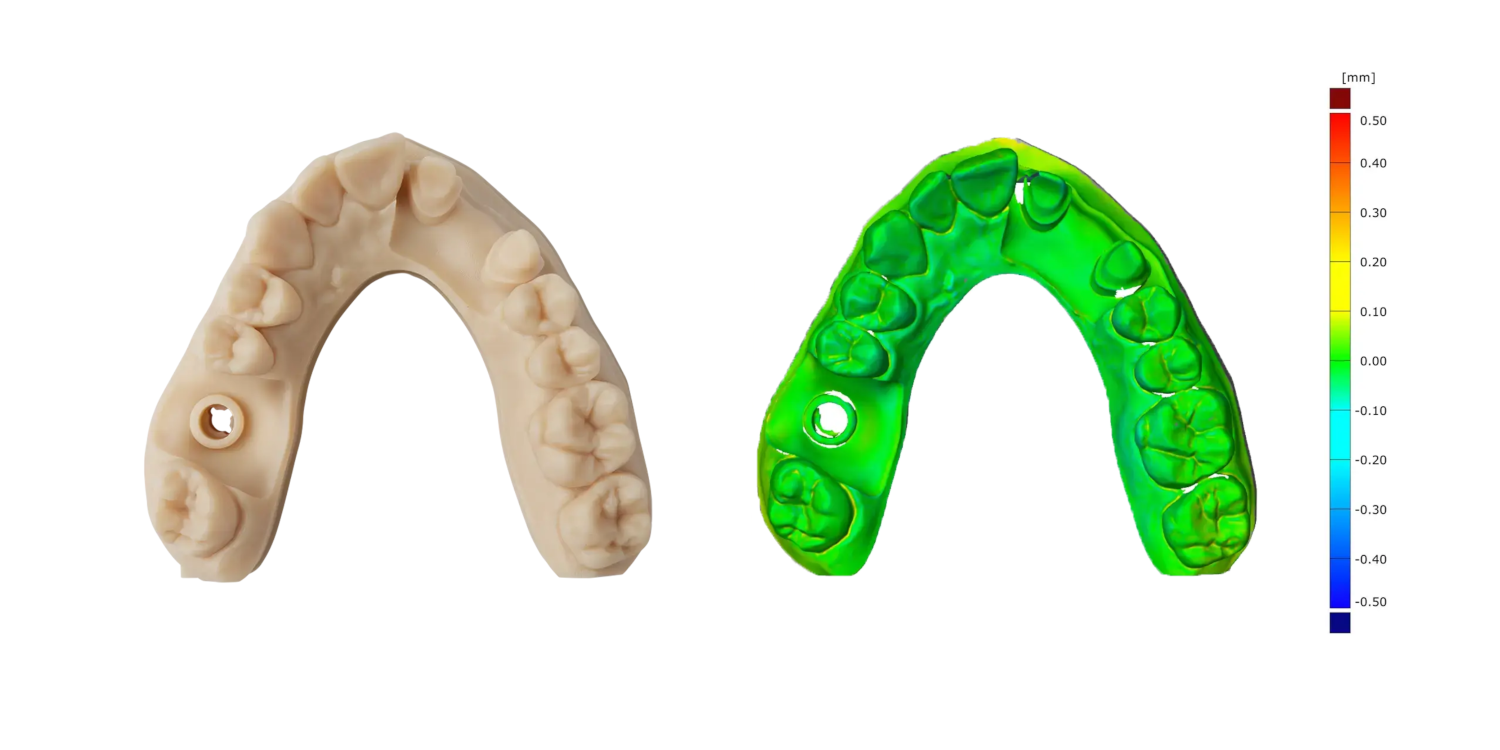
Model printed on a Form 4B printer with Precision Model Resin at 50 m. Surface scan analysis conrming the surface accuracy of the printed model.

Model printed on a Form 4B printer with Precision Model Resin at 50 m. Surface scan analysis conrming the surface accuracy of the printed model.

Form 4B powered by Low Force Display: Accelerating printing times
Speed is a major challenge for dental professionals working to tight deadlines. Dental 3D-printing manufacturers are constantly developing new hardware solutions to address this issue, striving to deliver faster printing times without compromising accuracy and aiming for easy-to-use systems. A prime example is the cutting-edge Form 4B, which is powered by Low Force Display, a next-generation printing engine. This engine combines ultra-high-power LEDs, collimating lenses, optical filters and a robust liquid crystal display (LCD), enabling each layer of resin to be polymerised instantly, regardless of the part size or the number of objects on the build platform. This new mSLA (masked stereolithography apparatus) printer and its advanced printing engine set a new benchmark for speed, accuracy, reliability and material versatility, allowing dental professionals to print parts at remarkable speeds. For instance, users can now print an entire build platform with 11 models for thermoformed appliances in just 9 minutes.

Crucially, the increase in printing speed does not compromise accuracy. Restorative models printed on the Form 4B with Precision Model Resin at a 50 μm layer height achieve 99.7% of the printed surface to within 100 μm of the CAD model and 95% to within 50 μm. The printer’s high-resolution LCD, with its 50 μm pixel size and pretuned anti-aliasing, delivers sharp details, smooth surface finishes and precise tolerances. The custom LCD also features high light transmission, maximising optical power to the resin and ensuring exceptional printing speed.

Fast Cure solutions: Expedited post-processing
These solutions utilise advanced polymerisation technologies to accelerate the polymerisation process, reducing turnaround times for finished dental products. For instance, Fast Cure solutions utilise 56 high-intensity ultraviolet LED light to rapidly polymerise printed parts, allowing dental professionals to expedite post-processing, as time is reduced to a maximum of 6 minutes, and deliver final products to patients more quickly.

Material innovation: Expanding possibilities

Material innovation is a driving force behind advancements in dental 3D printing. With the development of biocompatible resins for printing end-use appliances, allowing professionals to adopt model-less workflows, we have already seen an important shift in the production processes and delivery times. We will continue to see this area grow significantly, but one interesting factor is that these biocompatible resins are being tested to cover more indications with the same material. Some notable examples of material innovation are Formlabs’ Dental LT Comfort Resin, IBT Flex Resin and Premium Teeth Resin. 

Dental LT Comfort Resin enables printing of exible and resilient splints and of bleaching trays.

Dental LT Comfort Resin enables printing of exible and resilient splints and of bleaching trays.

IBT Flex Resin allows printing of indirect bonding trays for bracket placement and of direct composite restoration guides for the injection or press techniques.

IBT Flex Resin allows printing of indirect bonding trays for bracket placement and of direct composite restoration guides for the injection or press techniques.

Premium Teeth Resin enables printing for a wide range of restorative and prosthodontic applications.

Premium Teeth Resin enables printing for a wide range of restorative and prosthodontic applications.

Dental LT Comfort Resin: Versatile and comfortable
Dental LT Comfort Resin is specifically designed to meet the diverse needs of patients and dental professionals. This new formula for the production of resilient occlusal splints creates a new spectrum of material classification that lies between traditional soft splints and traditional hard acrylic splints. Splints printed with Dental LT Comfort Resin become flexible in intra-oral conditions, providing wearing comfort to the patient and thus increasing the probability of compliance with treatment, but still have the properties to provide occlusal stability (Shore hardness D: 75). Moreover, bleaching trays can be printed with this material, providing dental professionals with a comprehensive solution for various dental applications with a single resin. 

IBT Flex Resin: Enhanced performance and versatility
IBT Flex Resin represents a significant advancement in dental 3D printing, especially for the restorative field. This biocompatible material has been reformulated to meet the demanding requirements of indirect bonding trays. Now, dental professionals can also print direct composite restoration guides for provisional or permanent applications. The material’s superior strength, flexibility and accuracy, provided by the 50 μm layer height setting, enable dental professionals to achieve accurate results while reducing workflow complexity and turnaround times compared with traditional workflows.

Premium Teeth Resin: Multiple restorative indications
Premium Teeth Resin provides dental professionals with a strong, wear-resistant material with natural aesthetics for creating printed teeth for digital dentures, temporary full-arch implant-supported restorations (all-on-X), temporary single units (crowns, inlays, onlays and veneers) and up to seven-unit bridges. Compared with previous years and tooth-coloured resin generations, we are seeing an extension of clinical indications for both temporary and permanent use with new formulas. This provides a great deal of flexibility to dental professionals, as they can now resolve a wider range of clinical cases with a single resin.

Certified and open materials platforms
We will continue to see increased collaboration between resin manufacturers and 3D-printing companies to offer a specific selection of certified third-party resins for use with their 3D printers. For example, Formlabs runs a certified materials programme, collaborating with companies like BEGO to enable their restorative materials to work seamlessly with Formlabs’ hardware. Such collaborations involve thorough cross-testing, validation and the development of optimised settings by both companies. Additionally, software like Formlabs’ Open Material Mode will continue to expand, allowing dental professionals to use any 405 nm photopolymer resin with Form series printers. This empowers expert users and researchers to print with a wide range of market-available and custom resins. However, users must be aware of the requirements and responsibilities this entails, such as developing their own settings and conducting additional testing to ensure that the final product meets clinical standards.

Driving innovation in dental care with digital tools that optimise workflows

In conclusion, the integration of AI, automation, hardware optimisation and material innovation continues to propel the evolution of dental 3D-printing workflows. These advancements not only optimise efficiency and precision but also expand the possibilities for dental professionals, ultimately leading to improved patient care and outcomes. By embracing emerging technologies and leveraging innovative solutions, the dental industry is poised to revolutionise patient care and usher in a new era of dental excellence.


Editorial note:

This article was published in 3D printing–international magazine of dental printing technology Vol. 4, Issue 2/2024.

Topics:
Tags:
To post a reply please login or register
advertisement