Search Dental Tribune

Dyson presents CameraJet toothbrush at FDI World Dental Congress

The CameraJet combines variable sonic oscillation, camera-guided interdental jetting and a refillable mouthrinse reservoir in a single device. (All images: Dental Tribune International)

Sat. 5. September 2026

save

PRAGUE, Czech Republic: Today, Dyson presented its new CameraJet toothbrush to dental professionals at the FDI World Dental Congress in Prague. The device combines sonic toothbrushing, an integrated camera, machine learning and a targeted jet of mouthrinse intended to clean interdental spaces during brushing. The presentation followed the product’s official launch in Paris earlier this week.

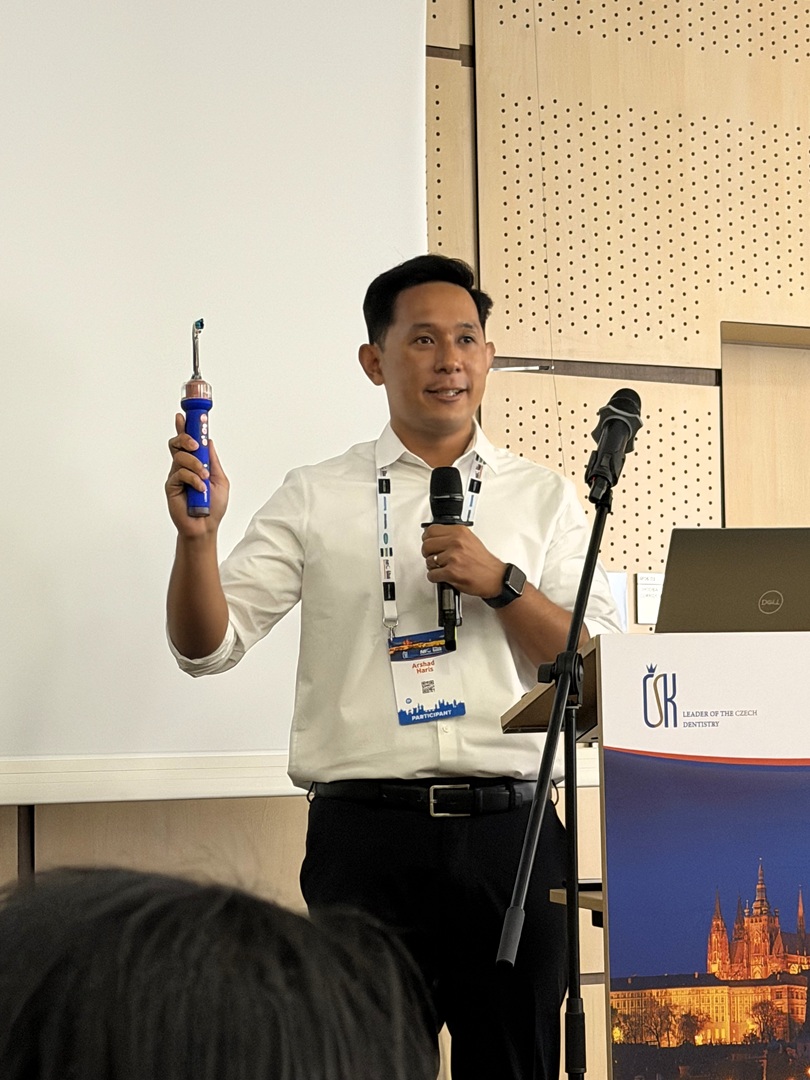
Dyson lead design engineer Arshad Haris explained the development of the CameraJet’s camera-based targeting and fluid-delivery systems.

Dyson lead design engineer Arshad Haris explained the development of the CameraJet’s camera-based targeting and fluid-delivery systems.

Central to the system is what Dyson calls Gap Optical Targeting. A 100,000-pixel macro camera analyses 28 images per second to identify interdental spaces in real time. According to the company, the system can recognise a gap and activate a conical jet of mouthrinse within 100 ms. The machine-learning system was developed using more than 470,000 dental images. The toothbrush also incorporates variable sonic oscillation intended to maintain bristle movement against the tooth surface.

Development of the targeted jet also involved laboratory testing using a proxy plaque created during a five-year collaboration between Dyson and the Faculty of Dentistry at the National University of Singapore. According to Dyson, the conical jet was designed to provide wider coverage of plaque at lower pressure than conventional narrow water jets.

Focus on improving home care

A panel discussion explored how such technologies might address persistent challenges in preventive oral care. Dr Roman Šmucler, president of the Czech Dental Chamber, argued that one of dentistry’s continuing challenges is translating professional recommendations into consistent daily behaviour. “This is the behavioural unmet need: not more information but reliable execution at scale,” Dr Šmucler said. “Even where professional care is highly developed, population prevention still leaks at home.”

Around 130 delegates attended Dyson’s presentation of the CameraJet toothbrush at the FDI World Dental Congress in Prague.

Around 130 delegates attended Dyson’s presentation of the CameraJet toothbrush at the FDI World Dental Congress in Prague.

Delegates had the opportunity to examine the CameraJet and its accompanying technology following the presentation.

Delegates had the opportunity to examine the CameraJet and its accompanying technology following the presentation.

He noted that dental professionals generally have little insight into how closely patients follow oral hygiene recommendations between appointments. Technologies capable of monitoring aspects of daily oral care, he suggested, could provide greater insight into patient behaviour and technique. “The future of oral hygiene is not about asking people to care more. It is about engineering new solutions to make people’s lives easier,” Dr Šmucler emphasised.

Dr Iain Chapple, emeritus professor at the University of Birmingham’s School of Dentistry in the UK, likewise stressed the importance of effective daily plaque control, telling attendees that “self-care is the future”. The panel also discussed interdental cleaning and long-term adherence to oral hygiene recommendations.

During his presenation, Prof. Iain Chapple emphasised the importance of effective daily plaque control and self-care.

During his presenation, Prof. Iain Chapple emphasised the importance of effective daily plaque control and self-care.

Dr Tomas Lang presented findings from ORMED’s robotic toothbrushing model, which assesses plaque removal under standardised laboratory conditions.

Dr Tomas Lang presented findings from ORMED’s robotic toothbrushing model, which assesses plaque removal under standardised laboratory conditions.

Laboratory and clinical evidence

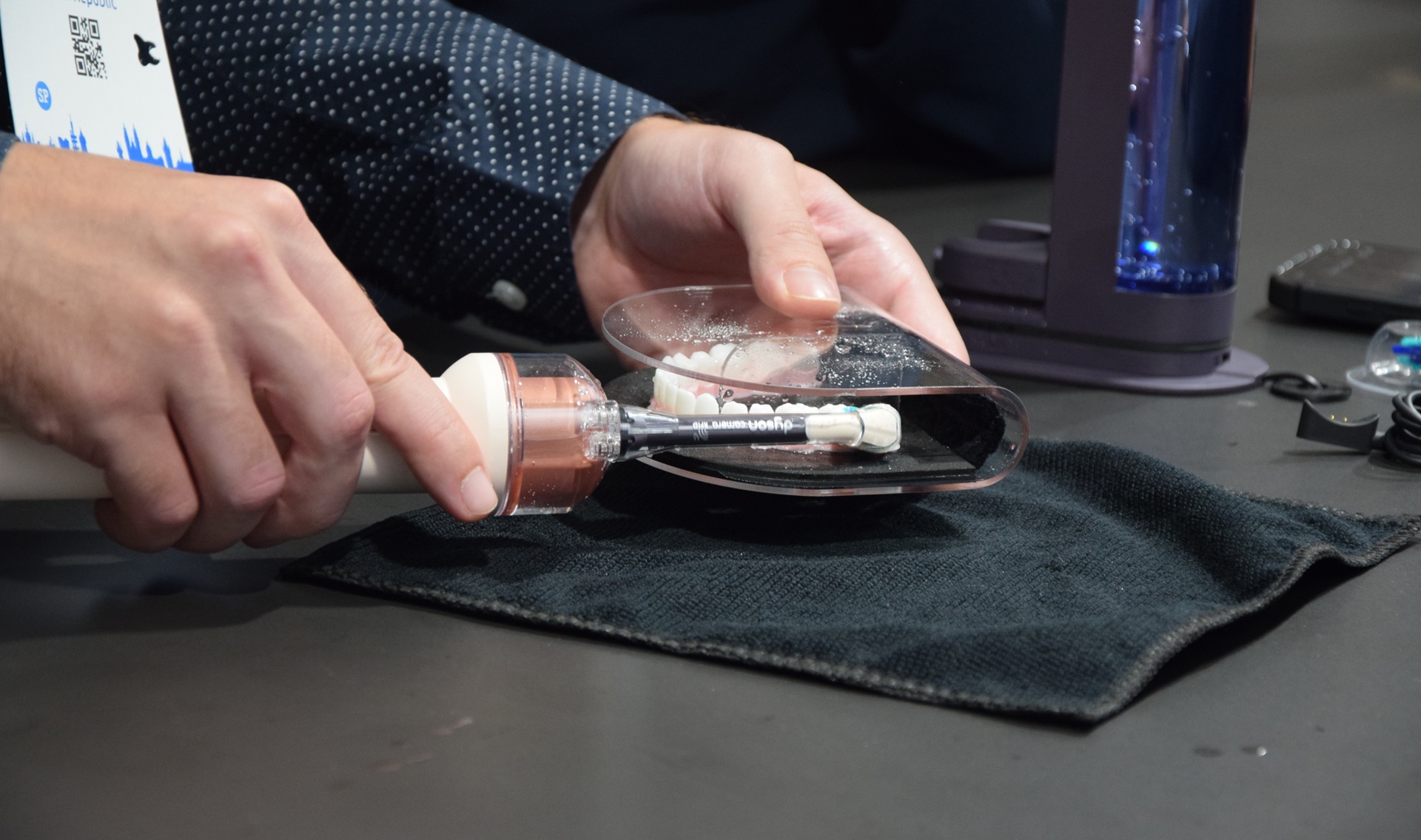
The CameraJet was demonstrated on a dental model during the presentation. Its camera-based targeting system identifies interdental spaces and activates a targeted jet of mouthrinse during brushing.

The CameraJet was demonstrated on a dental model during the presentation. Its camera-based targeting system identifies interdental spaces and activates a targeted jet of mouthrinse during brushing.

Dr Tomas Lang, CEO and co-founder of the ORMED Institute for Oral Medicine at Witten/Herdecke University in Germany, presented findings from testing using ORMED’s robotic toothbrushing model, which uses an artificial oral cavity to assess plaque removal under standardised conditions. The CameraJet was compared with manual, oscillating and conventional sonic toothbrushes. According to Lang, the laboratory findings indicated greater plaque removal by the CameraJet in difficult-to-reach areas compared with conventional electric toothbrushes.

Dr Vidhu Saad Sethi, global medical affairs lead at Dyson, outlined the company’s clinical research programme, which she said comprises four studies conducted in the US and Italy, two of which have been completed. Together, the studies involve 411 participants and have durations of four to six weeks. Among the results presented, Dr Sethi reported a 42% reduction in the whole-mouth Rustogi Modified Navy Plaque Index, compared with a 19% reduction for manual toothbrushing. “Consistent superiority was observed across laboratory and clinical studies at all evaluated brushing sites,” she said.

Detailed results from the overall clinical programme have not yet been published in peer-reviewed journals. The Dyson CameraJet is now available for €479 (US$499). Further information is available at www.dyson.com/oral-care.

Tags:
To post a reply please login or register
advertisement
advertisement