Clear aligner workflows can be managed through commercial providers, local laboratories or in-house production, depending on the practice’s clinical and organisational requirements. (All images: Polorto)
CZĘSTOCHOWA, Poland: Clear aligner therapy has expanded rapidly within orthodontics. Its appeal is linked to its discreet appearance, patient comfort and the ability to plan treatment digitally. For practices offering aligner therapy, an important strategic question is whether treatment planning and production should be outsourced or managed in-house. The decision can affect clinical oversight, turnaround times, costs, staffing requirements and the clinician–patient relationship.
Working with a commercial aligner provider
Commercial aligner providers rely on large-scale production, brand recognition and extensive marketing infrastructure. Their offerings typically include:
direct-to-patient marketing that increases awareness of aligner treatment;
treatment planning based on standardised digital processes and the diagnostic information submitted by the clinician;
varying levels of involvement by the treating clinician in developing and modifying the treatment plan;
access to established digital platforms, although the closed architecture of some systems may limit treatment-planning or production options;
consistent appliance production and packaging supported by established manufacturing processes; and
loyalty programmes that encourage the continued use of a single system, although the same solution may not be optimal for every patient.
This model can provide a convenient and standardised workflow, particularly for practices that do not have the equipment or personnel required for internal production. However, it may limit flexibility and can make it more difficult to adapt costs and production processes to the requirements of individual cases.
Local aligner laboratories as an alternative
Local laboratories may provide a more personalised approach and closer collaboration between the clinician and the technical team. Potential advantages include:
direct and timely communication with technicians;
a collaborative model based on shared experience, trust and knowledge;
greater flexibility in adapting treatment plans using the available diagnostic data;
flexible pricing and potentially shorter turnaround times; and
opportunities for case consultations with experienced clinicians or technicians.
However, the quality and range of services may vary between laboratories, and part of the workflow still has to be delegated outside the practice. The extent of the clinician’s involvement in treatment planning may also depend on the laboratory and the services selected.
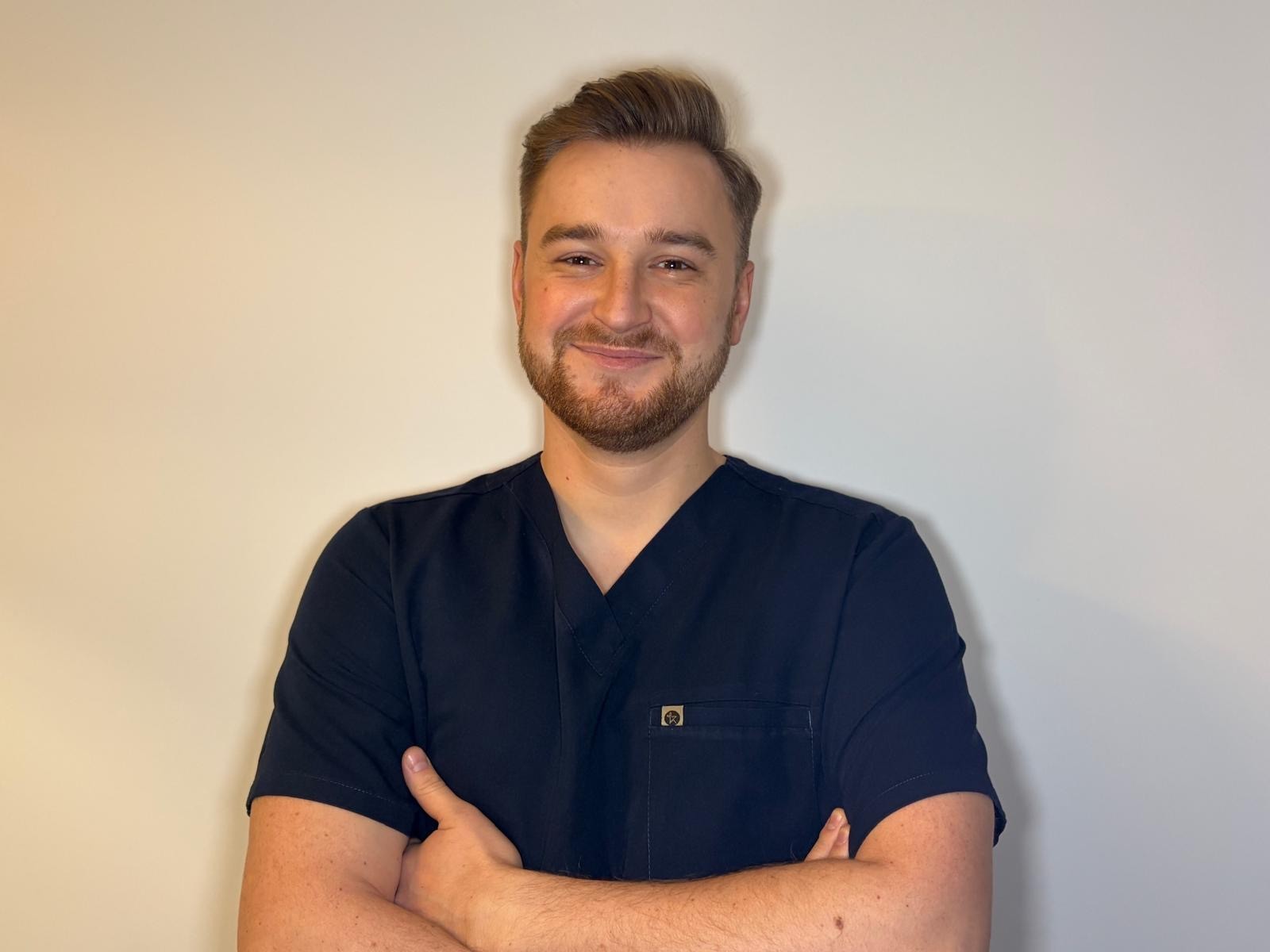
Dr Szymon Budziński, a Polish dentist practising orthodontics, focuses on treatment predictability, tooth movement and the role of anatomical data in digital orthodontic planning.
In-house production of aligners
Some practices are adopting an in-house model in which treatment planning and aligner production take place within the practice. This approach can provide greater control over diagnostics, treatment planning and production, while allowing the workflow to be adapted more readily to the individual patient’s needs. Potential advantages of in-house production include:
shorter planning and production times, particularly when digital tools such as DDP AI, DDP-Ortho and the DTS Aligner Planner module (Polorto) are integrated into the workflow;
direct involvement of the treating clinician in the treatment plan, supported by artificial intelligence and the Smart Set-up feature;
easier adaptation of treatment to the patient’s needs, including adjustments during therapy;
greater control over case-related costs, based on the number of aligners and services required;
the ability to reproduce lost aligners or retainers without returning the case to an external supplier;
greater independence from external providers and flexibility in selecting materials and production procedures;
direct oversight of appliance quality, supported by appropriate training and quality-control procedures; and
the option of offering aligners under the practice’s own branding.
“As a dental professional practising orthodontics, I leverage technologies that maximise treatment efficiency and patient comfort. With the DDP Systems workflow, we can produce aligners directly in the clinic, maintaining full control over diagnostics, treatment planning and individualised therapy, ensuring predictable and safe outcomes,” said Dr Szymon Budziński, a Polish dentist.
However, in-house production also requires suitable equipment, trained personnel, staff time and established production and quality-control procedures. The most appropriate workflow therefore depends on the clinician’s experience, the practice’s capabilities, case volume and organisational factors. Many practices adopt a hybrid model, completing selected cases in-house while outsourcing others.
Digital workflow for in-house aligner production
Diagnostic model—DDP AI The workflow begins with the creation of an advanced digital diagnostic model from a standard intra-oral scan. DDP AI processes the scan data and prepares the model for subsequent diagnostic analysis and treatment planning.
Treatment planning—DDP-Ortho DDP-Ortho supports the diagnostic and clinical treatment-planning stage. The software also includes the Smart Set-up feature. Its functions include:
diagnostic analysis and evaluation of the digital model;
cephalometric analysis;
identification of the malocclusion and planning of different treatment variants;
virtual set-up and visualisation of treatment goals; and
communication of the proposed treatment outcome to the patient.
Technical production—DTS Aligner Planner The DTS Aligner Planner module supports the technical preparation of models for aligner production. Its functions include:
selection of the required working models;
detailed planning of tooth movements;
adjustment of movement sequences and ranges;
planning of interproximal reduction; and
export of three-dimensional working models for printing.
Individual technical stages can be assigned to appropriately trained members of the practice team or to an external laboratory. However, the treating clinician must retain responsibility for diagnosis, treatment planning and clinical monitoring.
Choosing the appropriate aligner production model
The question of whether to outsource aligner production or bring it in-house is not solely a matter of technology; it also reflects a philosophy of care. For clinicians seeking greater control over the therapeutic process, an in-house model can provide more direct influence over treatment planning and the tools and procedures used. Digital ecosystems have made in-house aligner production increasingly accessible to a growing number of practices, offering greater flexibility, closer cost control and the ability to adapt treatment more readily to individual cases. Further information about Polorto’s digital planning solutions is available on the company’s website.
A female adult patient visited our clinic with the primary concern of the aesthetics of her maxillary anterior teeth. She was particularly dissatisfied with...
SEATTLE, U.S.; Bellevue Orthodontics says that its patients can walk out of their first appointment with a set of fully customized clear aligners. Utilizing...
Why do we need to straighten teeth? How do we do it? What is the best way? These are the big questions nowadays, and I think that the answers to these ...
DAMASCUS, Syria: The use of clear aligners in mild to moderate cases of malocclusion has been the subject of numerous studies, particularly as more dentists...
FORT WORTH, Texas, U.S.: Owing to the growing popularity of point-of-care 3D printing and the subsequent creation of 3D-printing laboratories, a recent ...
In aligner treatment, digital visualisation tools are increasingly informing how clinicians assess case complexity and present proposed treatment outcomes. ...
COPENHAGEN, Denmark: 3Shape has recently qualified the DGSHAPE DWX-42W mill as a Trusted Connection device for TRIOS Design Studio, its single-visit ...
KOBLACH, Austria: Amann Girrbach has announced the 4.2 upgrade of its Ceramill Mind and Ceramill Match software, which will allow dental professionals and ...
The rapid evolution of aligner therapy has often left a gap between research findings and daily clinical practice. To address this, the Italian Society of ...
MOSCOW, Russia: One primary benefit of aligners over fixed appliances is that, because they can be removed, biofilm formed on the teeth can be more easily ...
Education
Live webinar Tue. 13 October 2026 1:00 pm EST (New York)
SHARJAH, UAE: Recent evidence suggests that tooth wear is becoming both more prevalent and more severe among adolescents worldwide, but prevalence in the ...
MÉRIGNAC, France: As digital technologies continue to evolve, dental practices increasingly rely on multiple imaging, diagnostic and treatment planning ...
LONDON, England: Current approaches to enamel remineralisation can promote mineral recovery in demineralised enamel, but cannot regenerate enamel structure ...



 Brazil / Brasil
 Canada / Canada
 Latin America / Latinoamérica
 USA / USA
 Austria / Österreich
 Bosnia and Herzegovina / Босна и Херцеговина
 Bulgaria / България
 Croatia / Hrvatska
 Czech Republic & Slovakia / Česká republika & Slovensko
 France / France
 Germany / Deutschland
 Greece / ΕΛΛΑΔΑ
 Hungary / Hungary
 Italy / Italia
 Netherlands / Nederland
 Nordic / Nordic
 Poland / Polska
 Portugal / Portugal
 Romania & Moldova / România & Moldova
 Slovenia / Slovenija
 Serbia & Montenegro / Србија и Црна Гора
 Spain / España
 Switzerland / Schweiz
 Turkey / Türkiye
 UK & Ireland / UK & Ireland
 China / 中国
 India / भारत गणराज्य
 Pakistan / Pākistān
 Vietnam / Việt Nam
 ASEAN / ASEAN
 Israel / מְדִינַת יִשְׂרָאֵל
 Algeria, Morocco & Tunisia / الجزائر والمغرب وتونس
 Middle East / Middle East


 Dr. Pierre Marin, Dr. Antoine PopelutRegister now1CELive webinar
 Dr. Sinan GhishanRegister now1CELive webinar
 Dr. Sonia PresenciaLive webinar
 Dr. John Tsourounakis DDS, Cert. Perio, MS, FRCD(C)Register now1CE
















To post a reply please login or register