A bioengineered chewing gum formulation reduced levels of three microbes associated with head and neck squamous cell carcinoma and had minimal effects on selected commensal oral bacteria. (All images: Kevin Monko/Penn Dental Medicine)
PHILADELPHIA, US: Oral and oropharyngeal cancers remain a significant clinical challenge, and growing evidence has linked the oral microbiome to head and neck squamous cell carcinoma (HNSCC) development, progression or recurrence. Researchers at the University of Pennsylvania School of Dental Medicine have investigated whether a plant-based chewing gum formulation can reduce HNSCC-associated oral pathogens. The findings suggest that this approach could eventually be explored as a locally delivered adjunct for lowering microbial risk factors associated with oral and oropharyngeal cancer.
One part of the study focused on whether the chewing gum could reduce oral levels of human papillomavirus (HPV). Explaining the rationale for targeting HPV, lead researcher Dr Henry Daniell, W.D. Miller Professor and vice-chair of the Department of Basic and Translational Sciences at Penn Dental Medicine, told Dental Tribune International: “The global increase in oropharyngeal cancer has been linked to HPV-16, a high-risk type of HPV. When HPV integrates into human genome, it can initiate carcinogenic changes. Therefore, it is important to reduce or eliminate circulating HPV before integration.”
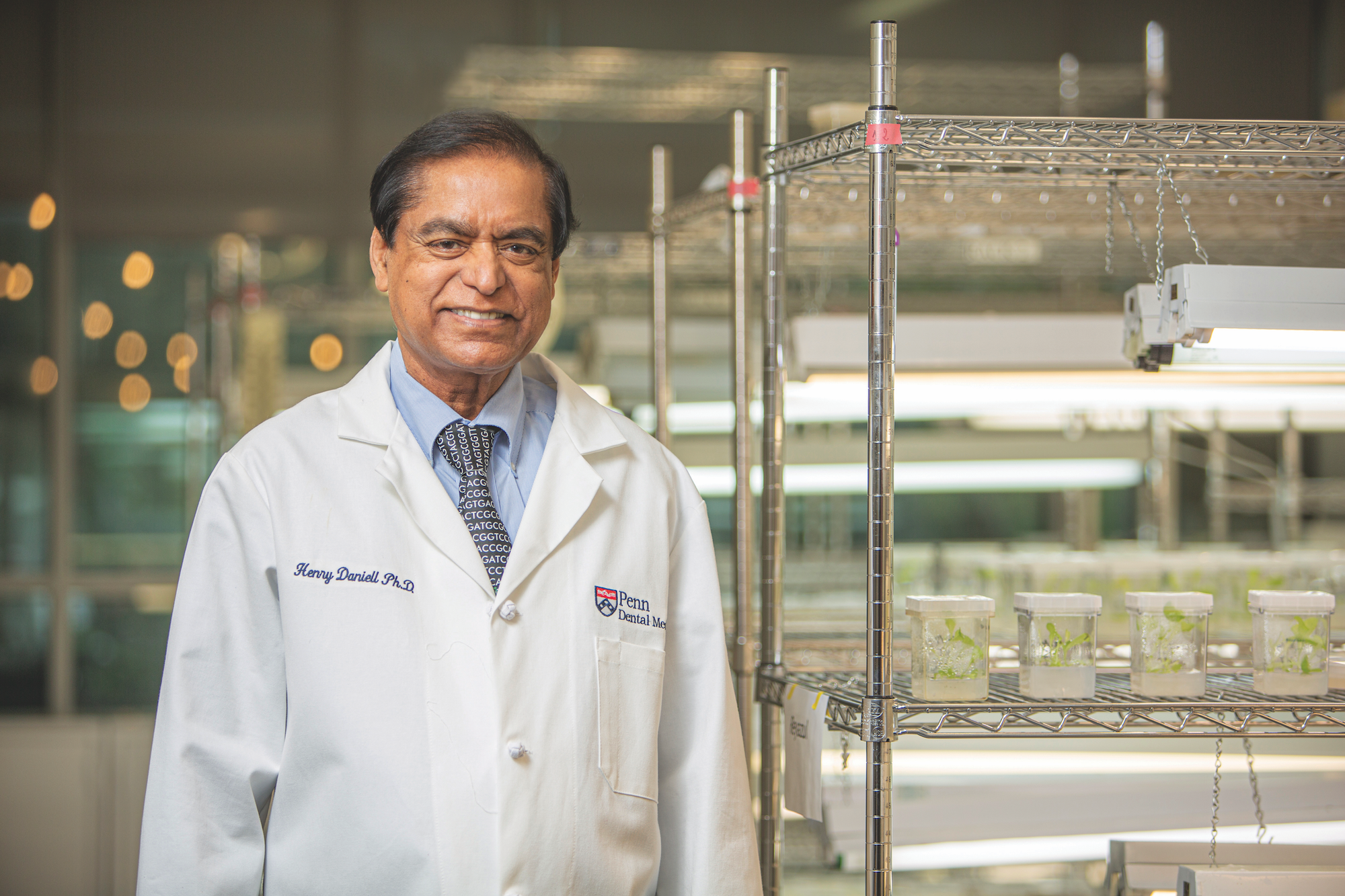
Dr Henry Daniell, W.D. Miller Professor and vice-chair of the Department of Basic and Translational Sciences at the University of Pennsylvania School of Dental Medicine in the US.
The research team collected saliva and oral rinse samples from patients with HNSCC and exposed these in the laboratory to extracts prepared from the chewing gum. The chewing gum formulation contained a protein derived from lablab beans that can bind to viruses and trap them, helping prevent their entry into host cells. This antiviral effect significantly reduced the detectable amount of HPV in the samples.
The researchers then optimised the chewing gum formulation by adding an antimicrobial peptide, seeking to target Porphyromonas gingivalis and Fusobacterium nucleatum, oral bacteria that have been implicated in oral cancer and HNSCC progression and survival outcomes. In ex vivo experiments, they found that the formulation reduced the concentration of both bacteria in saliva and oral rinse samples by more than 99%. The study also reported only minimal effects on selected non-pathogenic oral bacteria.
According to Prof. Daniell, the next step is clinical evaluation after regulatory authorisation. “Based on the successful reduction of these pathogens in ex vivo clinical studies, we plan to advance antiviral and antibacterial chewing gums for evaluation in HNSCC patients after authorisation by the US Food and Drug Administration of an investigational new drug application,” he said.
CHAPEL HILL, N.C., US: Head and neck squamous cell carcinoma (HNSCC) is a global health concern, ranking as the sixth most common malignancy worldwide. Poor...
AUGUSTA, Ga., U.S.: For a group of researchers from the Medical College of Georgia at Augusta University, the enzyme ecto-5’-nucleotidase (CD73) is going ...
PHILADELPHIA, U.S.: The dangers of smoking are well known, and in a new study, researchers have pinpointed it as being a major factor in developing head and...
LONDON, England: Balanced nutrition is known to lower the risk of major non-communicable diseases, including cardiovascular disease, neurodegenerative ...
ABERDEEN, Scotland: Head and neck cancer is a highly debilitating disease that has profound consequences for oral function, nutrition, communication and ...
FREIBURG, Germany: A recent study has shown that a plant-based wholefood diet enriched with omega-3 fatty acid and vitamin D is able to reduce gingival ...
HOUSTON, US/LILONGWE, Malawi: Studies have shown a link between maternal periodontal disease and preterm birth—delivery before the 37th week of pregnancy....
DUNEDIN, New Zealand/KOLKATA, India: In a recent study, researchers have discovered epigenetic markers that are markedly different in oral cancer tissue ...
LONDON, England: Treatment of head and neck cancer is notoriously complex, and only few advances have been made in the last 20 years. Last month, however, ...
Education
Live webinar Mon. 26 October 2026 11:00 am EST (New York)
Artificial intelligence (AI) and augmented intelligence are rapidly becoming part of dentistry, and applications span imaging, documentation, treatment ...
OULU, Finland: Anti-resorptive drugs are used to limit bone destruction, alleviate pain and reduce the risk of fractures in patients with advanced breast ...
SANA’A, Yemen: Previous research has identified gaps in dentists’ knowledge and use of physical therapies for temporomandibular disorder (TMD), but ...



 Brazil / Brasil
 Canada / Canada
 Latin America / Latinoamérica
 USA / USA
 Austria / Österreich
 Bosnia and Herzegovina / Босна и Херцеговина
 Bulgaria / България
 Croatia / Hrvatska
 Czech Republic & Slovakia / Česká republika & Slovensko
 France / France
 Germany / Deutschland
 Greece / ΕΛΛΑΔΑ
 Hungary / Hungary
 Italy / Italia
 Netherlands / Nederland
 Nordic / Nordic
 Poland / Polska
 Portugal / Portugal
 Romania & Moldova / România & Moldova
 Slovenia / Slovenija
 Serbia & Montenegro / Србија и Црна Гора
 Spain / España
 Switzerland / Schweiz
 Turkey / Türkiye
 UK & Ireland / UK & Ireland
 China / 中国
 India / भारत गणराज्य
 Pakistan / Pākistān
 Vietnam / Việt Nam
 ASEAN / ASEAN
 Israel / מְדִינַת יִשְׂרָאֵל
 Algeria, Morocco & Tunisia / الجزائر والمغرب وتونس
 Middle East / Middle East

 Dr. Dimple DesaiRegister now1CELive webinar
 Dr. Ahmed ElmoghazyLive webinar
 Dr. Gil Asafrana D.M.D, B.M.ScRegister now1CELive webinar
 Dr. Adrian Gnatek PhD | Oral SurgeonRegister now1CE














To post a reply please login or register