Search Dental Tribune

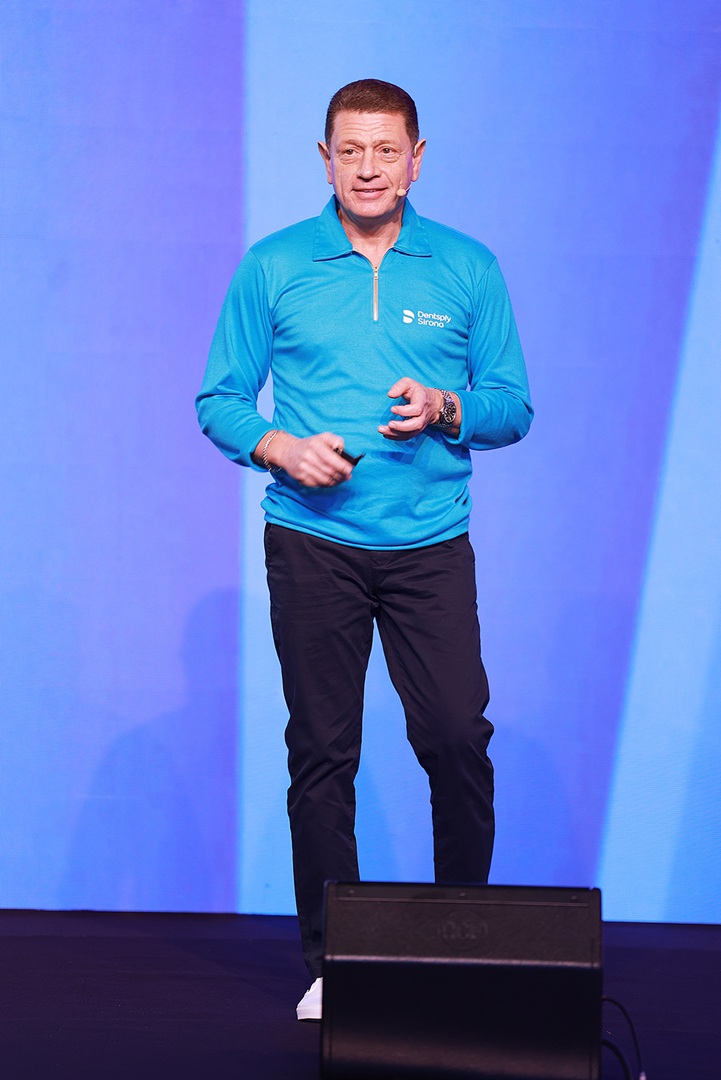
Kirill Levin (left) and Rajender Kumar see Dentsply Sirona World Dubai as a strategic platform for dialogue, innovation and collaboration across the regional dental community. (All images: Dentsply Sirona)
Dental Tribune International

Dental Tribune International

Tue. 10. March 2026

save

Held in January for the fourth time, Dentsply Sirona World Dubai has established itself as Dentsply Sirona’s flagship event for the Middle East, bringing together dental professionals from across the region and beyond to explore innovations, share clinical insights and discover connected workflows. On the sidelines of the meeting, Dental Tribune International spoke with Rajender Kumar and Kirill Levin, who are both involved in leadership of Dentsply Sirona’s business in the Middle East and North Africa region, about regional market dynamics, digitalisation, emerging practice models and the strategic role of Dentsply Sirona World.

Mr Kumar and Mr Levin, you both hold senior leadership roles within Dentsply Sirona, but have different regional and strategic responsibilities. Could you briefly outline your respective roles and how they contribute to the vision behind Dentsply Sirona World Dubai?
Kumar: I serve as general manager for the Middle East and Africa region and have been with Dentsply Sirona for around 13 years. After working in India, I relocated to Dubai and now oversee approximately 15 countries. Together with our local teams, we implement the regional and corporate strategy across these markets. Our focus is to provide advanced solutions and strong clinical education to enable dentists to deliver the highest standards of patient care.

Dentsply Sirona’s Kirill Levin views the Middle East as a high-growth market where clinicians are eager to adopt innovation and accelerate digital transformation.

Dentsply Sirona’s Kirill Levin views the Middle East as a high-growth market where clinicians are eager to adopt innovation and accelerate digital transformation.

Levin: This year marks 15 years with the company. Over time, my responsibilities have steadily expanded. I now oversee the commercial organisation in the Eastern region and, since early 2025, distribution in Europe, the Middle East and Africa. This breadth allows me to observe different approaches to dentistry and business and to apply the insights I gain in a way that is sensitive to regional specificities.

The Middle East is particularly exciting. What I have noticed, compared with more mature markets, clinicians here are a little bit more eager to adopt new technologies and knowledge. This creates significant growth opportunities and positions the region as strategically important for the future of dentistry.

How would you characterise the Middle Eastern dental market today, and what makes it strategically important within Dentsply Sirona’s global organisation?
Levin: The Middle East is a diverse and fast-growing region, offering opportunities but also certain challenges. Population growth and increasing migration from Europe are driving demand for high-quality services, including dentistry. Professionals relocating to countries such as the UAE or Saudi Arabia expect the same standards of care they were accustomed to at home. We recently opened a new office in Riyadh, and the pace of development there is remarkable. Being present at the right time allows us to support this rising demand effectively.

“While we follow a global strategy, we adapt it to regional needs.”

Kirill Levin, Dentsply Sirona

Kumar: Every country has its own mindset, regulatory framework, working style and, in some cases, language and cultural nuances. The region is highly diverse and complex. As a result, strategies and campaigns must be carefully adapted to local expectations.

The region is expanding rapidly, particularly in North Africa. Major infrastructure investment, population growth and the increase in dental schools—especially in Egypt—underline its potential. Many graduates from Egyptian universities go on to practise across the Middle East and North Africa region and beyond. While political instability can present challenges in some markets, the diversity of the region also provides resilience. If one country slows down, others may continue to grow.

How is the shift towards consolidated practice models, including the growth of dental support organisations, influencing demand and your strategy?
Kumar: Private practices still dominate, but in markets such as Saudi Arabia and the UAE, the dental service organisation segment is growing rapidly. Large investors and business groups are acquiring smaller clinics, creating sizeable networks. This development presents both opportunities and challenges. Dental service organisations are highly professional and demand competitive pricing and comprehensive service. However, securing such partnerships can result in high-value, large-scale projects.

Institutional projects and tenders are also substantial in scale. It is not uncommon to see university clinics with several hundred chairs. This differentiates the region from many European markets and influences how we structure our approach.

Innovation and clinical education are core pillars of Dentsply Sirona. How do initiatives such as Skills on Wheels reflect your regional strategy?
Kumar: Innovation and clinical education are central to our commitment to the profession. Given the size and diversity of the region, it is not feasible to operate permanent academies everywhere. Skills on Wheels addresses this by bringing education directly to clinicians.

In the first quarter of this year, Dentsply Sirona will launch Skills on Wheels as part of the Dentsply Sirona Tour—an ambitious journey covering more than 10,000 km and stopping in 15 cities across Saudi Arabia, Bahrain, Qatar, Oman, Kuwait and the UAE. A fully equipped mobile unit will travel from city to city, offering hands-on training, product demonstrations and clinical education. By moving closer to clinicians and providing training at their doorstep, we respond to regional challenges while supporting better understanding of digital workflows and advanced technologies.

Levin: Agility is essential. While we follow a global strategy, we adapt it to regional needs. Skills on Wheels is a strong example of how we translate a global vision into a locally relevant initiative.

What role does online education play in Dentsply Sirona’s overall strategy?
Levin: Online education enables us to reach professionals efficiently. Compared with 20 or 25 years ago, clinicians no longer need to close their practices and travel extensively to access learning. Digital platforms—such as the Dentsply Sirona Academy campus—allow knowledge to be delivered anytime and anywhere. With trusted partners, this approach will become even more sophisticated.


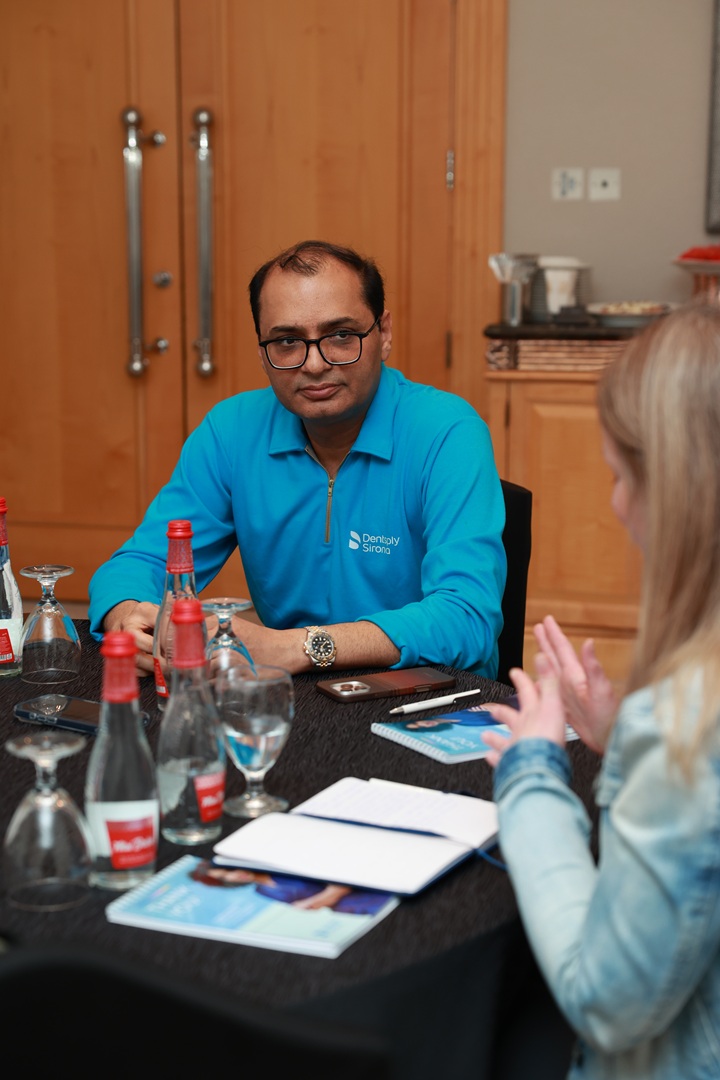
For Dentsply Sirona’s Rajender Kumar, bringing education directly to clinicians across the Middle East and North Africa region is key to strengthening digital dentistry and supporting high standards of patient care.

For Dentsply Sirona’s Rajender Kumar, bringing education directly to clinicians across the Middle East and North Africa region is key to strengthening digital dentistry and supporting high standards of patient care.

Kumar: We see education increasingly as blended learning. Nothing replaces personal interaction, hands-on experience and live discussion. However, webinars and online courses provide flexibility and broaden access, especially in geographically distant markets. From a commercial perspective, online education can also serve as an effective entry point into new markets before expanding into in-person activities.

Dentsply Sirona World Dubai has become a key platform in the regional calendar. What makes this event strategically important for Dentsply Sirona?
Levin: Dentsply Sirona World is more than a masterclass or hands-on session. It is a platform for dialogue among peers. Open exchange with practitioners allows us to better understand their needs and translate these insights into meaningful innovation.

Kumar: Dentsply Sirona World Dubai is not only a UAE event; it attracts participants from across the Middle East and beyond. This year, delegates have travelled from more than 60 countries—demonstrating that Dubai is a strategically important hub for a much wider region.

The event has three main objectives. The first is innovation: we showcase our latest technologies and allow participants to experience them directly. The second is clinical education: workshops and lectures cater to varying levels of expertise. We invite internationally recognised speakers from the US, the UK and other regions. The third is networking: dentists can connect with peers from around the world, exchange ideas and continue sharing knowledge beyond the event. Collaboration ultimately strengthens clinical practice.

“Digital adoption began earlier in the US and Europe, but the Middle East is progressing rapidly.”

Rajender Kumar, Dentsply Sirona

The theme of this year’s Dentsply Sirona World Dubai is “Experience the future of connected dentistry”. What is the level of digitalisation in the Middle East?
Kumar: Digital adoption began earlier in the US and Europe, but the Middle East is progressing rapidly. Sales data reflects strong growth in intra-oral scanners and other digital solutions. Over the next two to four years, adoption is likely to accelerate further.

Levin: While digitalisation arrived later, demand here is strong. Clinicians are keen to adopt advanced solutions quickly. This mindset supports rapid expansion of integrated digital workflows. The coming years are likely to see exponential growth in digital dentistry across the region.

Finally, what personally excites you most about Dentsply Sirona World Dubai and its future?
Levin: Dentsply Sirona World Dubai is our flagship educational event in the region. The decision to establish our own platform rather than participate in larger exhibitions was significant but has proved successful. The high standard we have set challenges us each year to exceed expectations. Maintaining this level of excellence requires creativity and ongoing innovation.

Kumar: From a regional perspective, the enthusiasm is clear. This is the fourth edition, and participation continues to grow. Those wishing to attend actively inquire about future dates and speakers, reflecting sustained interest. The increasing number of participants from different countries, supported by simultaneous interpretation where required, demonstrates the expanding international relevance of the event.

Tags:
To post a reply please login or register
advertisement
advertisement