Digital technologies for computer-aided imaging, planning, design and manufacturing are valuable tools that support dental technicians in their daily work. When combined with manual approaches, these digital tools allow clinicians and technicians to assess aesthetic and functional parameters and to shape restoration design and morphology with precision, ultimately meeting—or even exceeding—patient expectations. The present case illustrates this clearly: 20 natural-looking bleach-shade restorations were produced using KATANA Zirconia YML, CERABIEN ZR porcelains and Noritake Super Porcelain EX-3 (all Kuraray Noritake Dental).
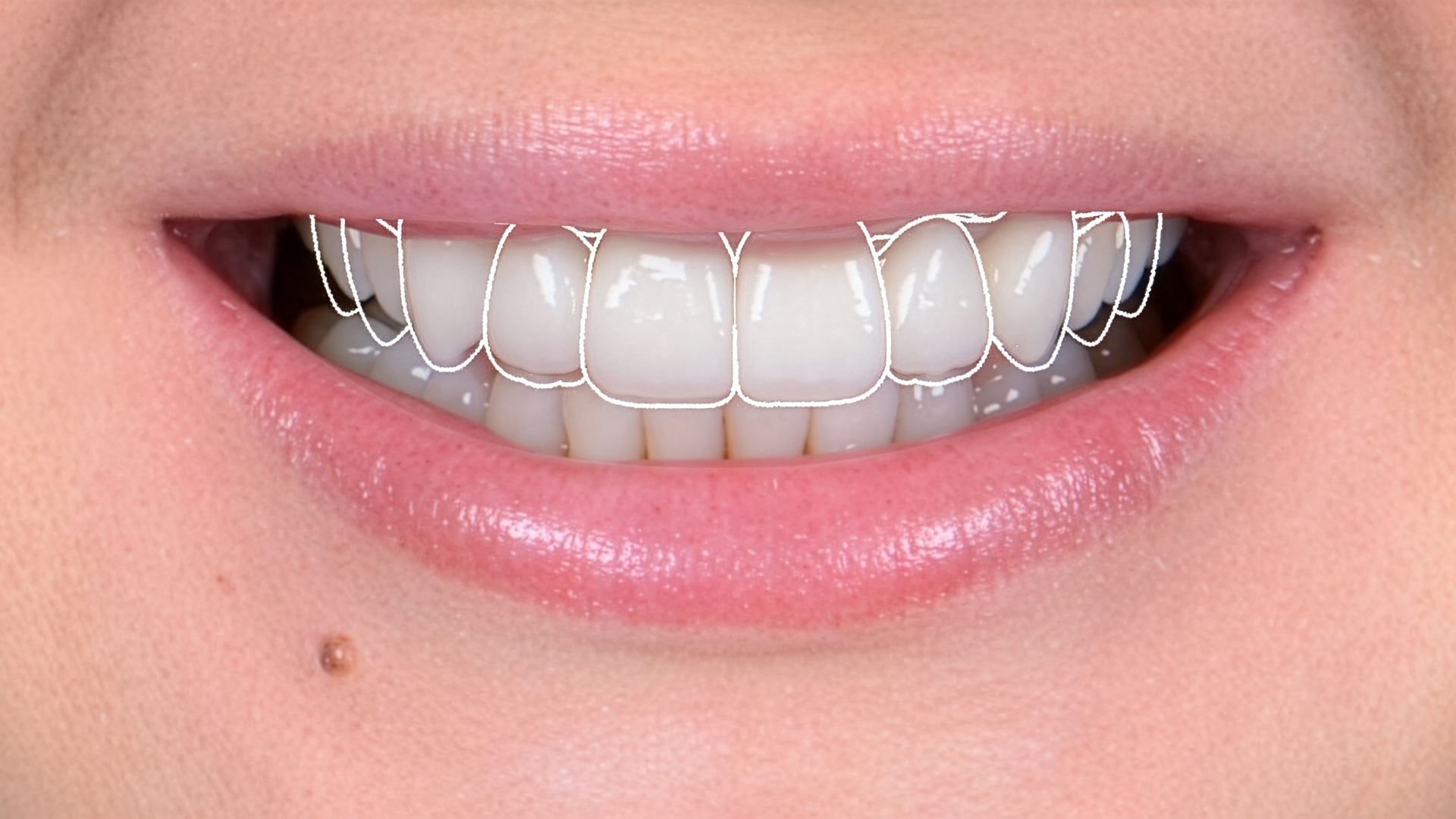
Fig. 2: Digital smile design based on a facial photograph.
Initial situation
The objective was to create a new white and natural-looking smile, based on the initial clinical situation (Fig. 1). It was decided to replace the existing crowns in the maxilla and to achieve a wider and brighter smile by adding laminate veneers in both the maxilla and mandible.
Digital smile design and diagnostic wax-up
Digital smile design and a diagnostic wax-up are effective tools for analysing and planning a new smile. Intra-oral scans and portrait photographs of the patient served as the basis for developing ideal tooth proportions and shapes. Once the design of the new restorations had been completed in DentalCAD (exocad; Figs. 2–4), the wax-up models were printed and subsequently used to fabricate a matrix for transfer of the design to the patient’s mouth for intra-oral evaluation (Fig. 5). This try-in also allowed the planned aesthetic outcome to be evaluated extra-orally (Fig. 6). At this stage, aesthetic and functional analysis are of primary importance.
Fig. 3: Computer-aided wax-up in the maxilla and mandible based on the digital smile design.
Fig. 4: Completed digital wax-up for the maxilla and mandible.
Fig. 5: Wax-up transferred to the patient’s mouth for functional and aesthetic analysis.
Fig. 6: Extra-oral evaluation of the planned aesthetic outcome using the try-in.
Fig. 7: Alveolar models printed in gingival and tooth-coloured materials.
Fig. 8: Printed models with articulator mounting plates and with the dies removed.
Fig. 9: Duplication of the printed dies using refractory material.
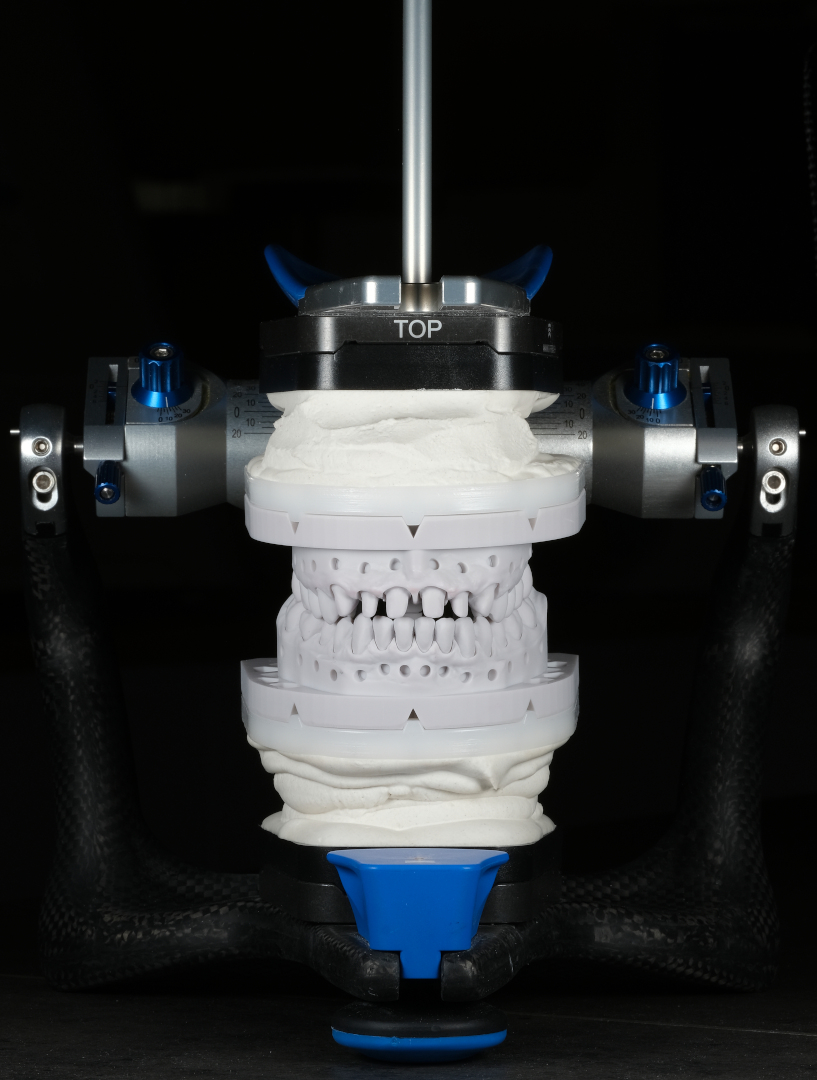
Fig. 10: Mounting of the models in the articulator.
Alveolar printed models
Precise and functional models are essential for the fabrication of accurate and aesthetic restorations in the laboratory. Model builder software (SHERAeasy-model, SHERA Werkstoff-Technologie) and a 3D printer (MAX UV, Asiga) were used to produce master and alveolar models with full gingival information and removable dies (Figs. 7 & 8).
Refractory die duplication and articulation
The refractory die technique enables the fabrication of extremely thin-walled restorations and therefore supports minimal tooth structure removal. This approach is particularly suitable for previously untreated teeth without major defects. The printed dies were duplicated using a refractory die material before the models were mounted in the articulator to transfer the maxillomandibular relationship (Figs. 9 & 10).
Production of the restorations
To achieve optimal results, careful selection of materials is essential for each clinical situation. For the crown frameworks of the six maxillary anterior restorations, KATANA Zirconia YML in Shade NW was selected as the most suitable option (Figs. 11–13).
The intaglio surfaces of the frameworks were treated with Esthetic Colorant (Kuraray Noritake Dental) in Shade Opaque to prevent discoloration showing through from some of the prepared teeth. After sintering of the frameworks in a high-temperature furnace (Nabertherm) at 1,550 °C, CERABIEN ZR porcelains were applied. To create natural internal effects between the porcelain layers, internal staining with CERABIEN ZR internal stains was used. This approach is both predictable and efficient. Each stage of porcelain build-up and staining was documented photographically to monitor the process and record all relevant protocol steps (Figs. 14–24). The veneers were fabricated from Noritake Super Porcelain EX-3 on the refractory dies to restore the premolars in the maxilla and the central incisors through to the second premolars in the mandible.
Fig. 11: Refractory dies and zirconia frameworks positioned on the model.
Fig. 12: Wax-up on the removable dies positioned on the model.
Fig. 13: Zirconia frameworks positioned on the model.
Fig. 14: Opacity control using CERABIEN ZR Opacious Body in Shade OB White to optimise brightness.
Fig. 15: Application of CERABIEN ZR Body in Shade NW0.5B to restore the crown contours using a silicone index.
Fig. 16: Application of CERABIEN ZR Enamel in Shade E1 and CERABIEN ZR Luster in Shade LTX to create translucency at the incisal edge.
Fig. 17: Prepared surface ready for internal stain application.
Fig. 18: Creation of mamelons and incisal effects using CERABIEN ZR internal stains.
Fig. 19: Adaptation of the incisal third using a mamelon-effect mixture of CERABIEN ZR internal stain shades (White, Mamelon Orange and Bright).
Fig. 20: Result after completion of the internal staining procedure.
Fig. 21: Application of CERABIEN ZR Luster using the interchangeable build-up technique; CERABIEN ZR Clear Cervical in Shade CCV-1 applied in the cervical area.
Fig. 22: Use of CERABIEN ZR Luster in Shade ELT1 for the main body, Shade LTX for the incisal area and Shade ELT3 for the ridges.
Fig. 23: Restorations after contouring, hand polishing and self-glaze firing.
Fig. 24: Layering map of the porcelain layers.
Fit assessment and try-in
After completion of the laboratory procedures, the restorations were positioned on the printed master models (Figs. 25–27). This step is essential to verify passive fit, interproximal contact areas and overall integration of each crown and veneer. Subsequently, the restorations were tried in to assess fit, aesthetics and occlusion (Fig. 28).
Fig. 25: Final restorations ready for fit assessment.
Fig. 26: Verification of passive fit and interproximal contact areas of the maxillary restorations on the model.
Fig. 27: Verification of passive fit and interproximal contact areas of the mandibular restorations on the model.
Fig. 28: Intra-oral try-in of the restorations.
Fig. 29: Clinical situation immediately after definitive placement of the restorations.
Definitive placement and final outcome
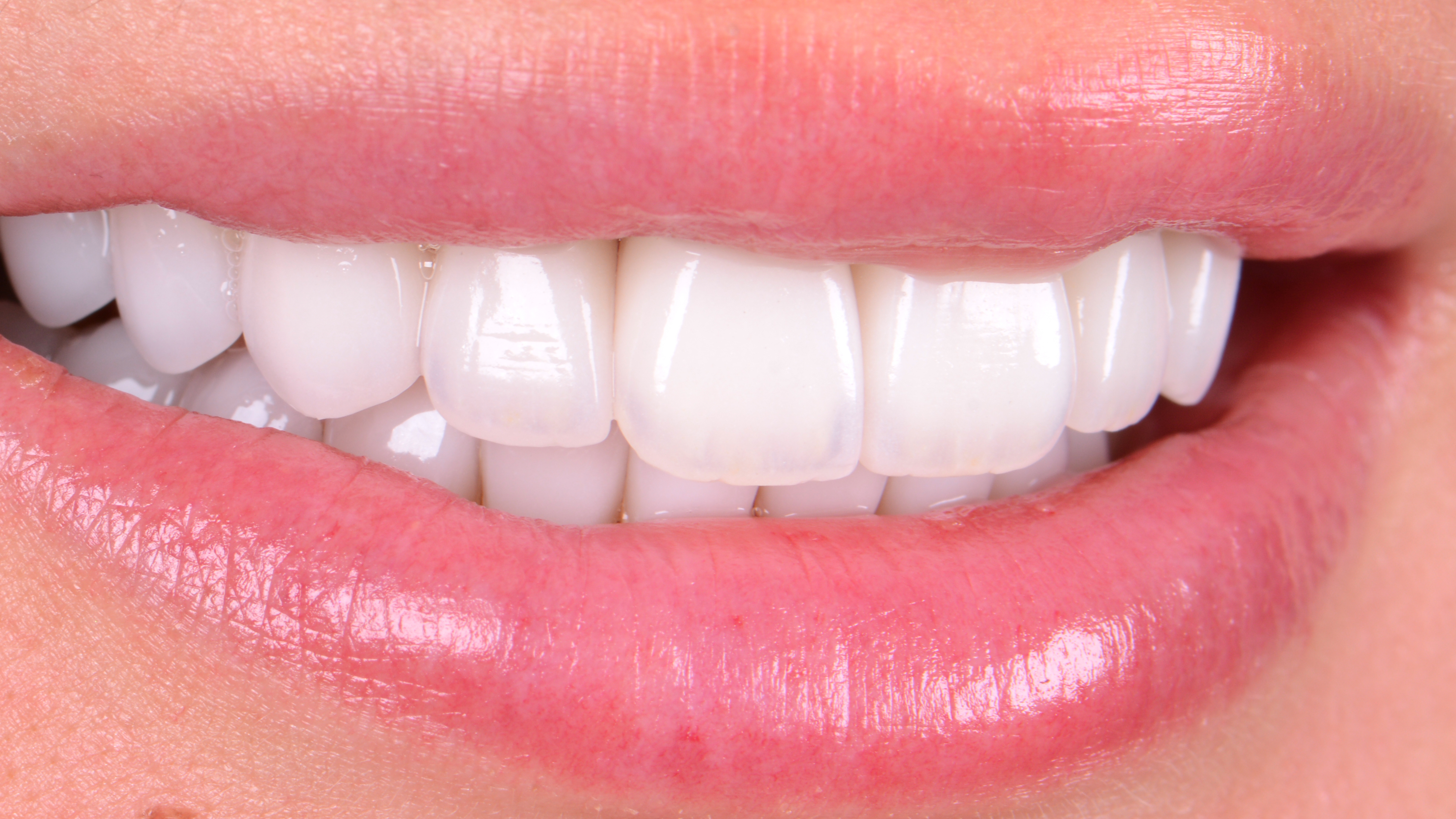
The veneers were cemented using an adhesive protocol with a resin composite, and the crowns were cemented using an opaque glass ionomer cement (Figs. 29 & 30). At the recall appointment approximately one month after placement, excellent gingival conditions were observed, together with a harmonious, healthy and aesthetically pleasing smile (Figs. 31–33).
Definitive placement and final outcome
The veneers were cemented using an adhesive protocol with a resin composite, and the crowns were cemented using an opaque glass ionomer cement (Figs. 29 & 30). At the recall appointment approximately one month after placement, excellent gingival conditions were observed, together with a harmonious, healthy and aesthetically pleasing smile (Figs. 31–33).
Fig. 30: Pink and white aesthetics achieved with the ceramic restorations.
Fig. 31: Healthy gingival conditions observed one month after restoration placement.
Fig. 32: Final smile after completion of treatment.
HATTERSHEIM AM MAIN, Germany: It is both a blessing and a curse that different zirconia materials are used depending on the indication—a blessing because ...
HATTERSHEIM AM MAIN, Germany: From 1 July onwards, Kuraray Noritake Dental’s KATANA Zirconia YML, the latest evolution in multilayered zirconia, will be ...
In 1983, Kuraray introduced the patented MDP monomer in its PANAVIA EX cement. 35 years later, MDP monomer-based resin cements have been scientifically ...
TOKYO, Japan: Dentistry is evolving rapidly, and expectations regarding restorative materials continue to rise. Today, most dental practitioners are aware ...
When it comes to the aesthetic performance of restorations in the anterior region, a key aspect to consider is translucency—the ability of the material to...
HATTERSHEIM AM MAIN, Germany: Using different zirconia materials owing to patient-specific needs and indications can allow for the best possible outcomes, ...
A female patient came to Studio Cortellini in Riccione in Italy in order to improve not just her ability to chew but also the overall aesthetic appearance ...
When it was first introduced to restorative dentistry in the early 2000s, zirconia was an opaque, unnatural-looking substance with a chalk-like whiteness. ...
HATTERSHEIM AM MAIN, Germany: It is strong, pre-shaded like natural teeth, and reliable; it is KATANA Zirconia HTML, the strongest member of the KATANA ...
KATANA Zirconia Block (Fig. 1) has hardly any features in common with the zirconia that was so popular in dental laboratories two decades ago and was used ...



 Brazil / Brasil
 Canada / Canada
 Latin America / Latinoamérica
 USA / USA
 Austria / Österreich
 Bosnia and Herzegovina / Босна и Херцеговина
 Bulgaria / България
 Croatia / Hrvatska
 Czech Republic & Slovakia / Česká republika & Slovensko
 France / France
 Germany / Deutschland
 Greece / ΕΛΛΑΔΑ
 Hungary / Hungary
 Italy / Italia
 Netherlands / Nederland
 Nordic / Nordic
 Poland / Polska
 Portugal / Portugal
 Romania & Moldova / România & Moldova
 Slovenia / Slovenija
 Serbia & Montenegro / Србија и Црна Гора
 Spain / España
 Switzerland / Schweiz
 Turkey / Türkiye
 UK & Ireland / UK & Ireland
 China / 中国
 India / भारत गणराज्य
 Pakistan / Pākistān
 Vietnam / Việt Nam
 ASEAN / ASEAN
 Israel / מְדִינַת יִשְׂרָאֵל
 Algeria, Morocco & Tunisia / الجزائر والمغرب وتونس
 Middle East / Middle East

 Dr. Ronald JungLive webinar
 Prof. Aylin Baysan BDS MSc PhD MFDS RCSEd MEndo RCSEd FDTFEd FDS RCSEng PHEARegister now1CELive webinar
 Prof. Dr. Gustavo De-DeusLive webinar
 Dr. Dimple DesaiRegister now1CE
















To post a reply please login or register