A recurring theme at the sixth GC International Dental Symposium in October in Tokyo will be the importance of careful diagnosis and cross-disciplinary treatment planning in oral rehabilitation. (Image: Skyda Productions/Adobe Stock)
TOKYO, Japan: Set for 3 and 4 October in Tokyo, the sixth GC International Dental Symposium will bring together general practitioners, specialists, dental hygienists and dental technicians from around the world as part of GC Corp.’s wider One Week of Excellence programme. The two-day scientific programme of lectures and hands-on sessions will explore the latest workflows, technologies and research across restorative and aesthetic dentistry, prosthodontics, periodontics, implant dentistry, endodontics and aligner therapy. A recurring theme will be comprehensive rehabilitation and complex case management, reflecting the increasingly multidisciplinary nature of oral care.
Within this theme, the programme will examine how clinicians can manage demanding cases in which function, aesthetics, structural integrity, occlusion and tooth movement must be considered together. Lectures by leading international speakers such as Dr Anthony Mak, Prof. Marco Ferrari, Prof. Joseph Sabbagh and Prof. Michel Le Gall will address worn dentition, oral rehabilitation, fracture prevention in endodontics and orthodontic principles. Together, these presentations will highlight the importance of careful diagnosis, treatment sequencing and long-term planning in achieving stable and predictable outcomes.
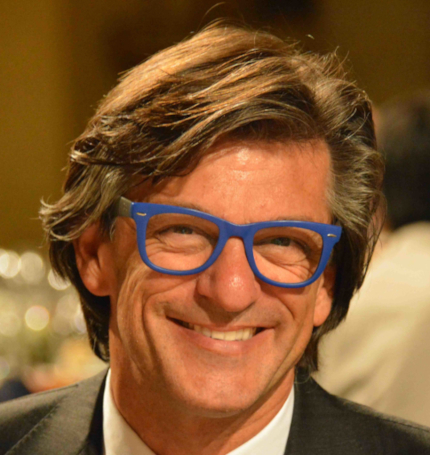
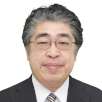
According to Prof. Marco Ferrari, whose presentation at the sixth GC International Dental Symposium will address comprehensive solutions in oral rehabilitation, complex cases require a comprehensive approach. (Image: GC Corp/Prof. Marco Ferrari)
According to Prof. Ferrari, who will speak as part of the session “Restoring function, refining aesthetics: Comprehensive solutions in oral rehabilitation”, complex cases require a comprehensive approach rather than fragmented treatment decisions. He told Dental Tribune International: “In oral rehabilitation, function and aesthetics are intrinsically connected and must be planned together from the very beginning. Patients expect both the ability to chew properly and a satisfactory aesthetic outcome, and neither can be addressed in isolation.”
Prof. Ferrari explained that this integrated approach begins with the simultaneous evaluation of function, occlusion, biology and aesthetics. Material selection is part of the same decision-making process and should be guided by the patient’s occlusal condition, the presence or a history of parafunction, and the extent of tooth wear. “All these factors influence how function and aesthetics can be predictably combined,” he said. He added that holistically planned rehabilitation improves the consistency and durability of patient-centred outcomes.
Long-term clinical evidence will also form part of Prof. Ferrari’s contribution to the programme. Reflecting on follow-up data of up to nine years on lithium disilicate and nano-ceramic resin-based restorations, he emphasised that both material groups can perform well when correctly indicated. In patients without signs of wear or parafunction, nano-ceramic resin-based material may provide a reliable solution, he said, whereas lithium disilicate is generally preferable when limited parafunction is present. In cases of very heavy parafunction, zirconia may be preferred because of its high strength and stiffness, he explained.
“Ultimately, long-term success depends less on the material alone and more on correct diagnosis, proper case selection and ongoing functional monitoring,” Prof. Ferrari said.
This emphasis on diagnosis and long-term stability connects Prof. Ferrari’s presentation with the wider rehabilitation theme of the symposium. Dr Mak’s paper on direct and indirect solutions for worn dentition, Prof. Sabbagh’s contribution to the session on fracture prevention in endodontics and Prof. Le Gall’s participation in the orthodontics excellence programme will each approach complex case management from a different area of dentistry. Together, the sessions will underline that successful rehabilitation depends not only on individual restorative choices but also on interdisciplinary planning, structural preservation, occlusal control, and the anticipation of future biological and functional risks.
Well known for its focus on promoting international exchange and networking, GC is holding the symposium as part of its One Week of Excellence. The two-day scientific programme will be accompanied by social events and a cultural itinerary connecting international participants with the company’s Japanese heritage, including organised tours of Tokyo and the historic mountain town of Nikkō, as well as an introduction to the company’s precision manufacturing and research facilities. The event will be hosted at the Tokyo International Forum and will offer simultaneous interpretation into Japanese and English. More information about the programme and registration is available on the event website.
TOKYO, Japan: Leading dental manufacturer GC Corp. has invited global dental professionals to save the date for its sixth International Dental Symposium, ...
On 3 and 4 October, dental professionals from around the world will gather in Tokyo in Japan for the sixth GC International Dental Symposium. Organised as ...
In October last year, GC Holding announced the appointment of Dr Per Falk as CEO of the company. At the International Dental Show (IDS), Dental Tribune ...
MILAN, Italy: The annual meeting of the European Association for Osseointegration (EAO) was held in Milan last week, and one of the highlights of the event ...
LUCERNE, Switzerland: GC Holding has recently announced the appointment of Dr Per Falk as CEO of the company, effective from 1 October. In April, GC ...
LEIPZIG, Germany: Gum Health Day 2026 marks the start of a three-year global awareness campaign by the European Federation of Periodontology (EFP) under the...
Education
Live webinar Thu. 5 November 2026 1:00 pm EST (New York)



 Brazil / Brasil
 Canada / Canada
 Latin America / Latinoamérica
 USA / USA
 Austria / Österreich
 Bosnia and Herzegovina / Босна и Херцеговина
 Bulgaria / България
 Croatia / Hrvatska
 Czech Republic & Slovakia / Česká republika & Slovensko
 France / France
 Germany / Deutschland
 Greece / ΕΛΛΑΔΑ
 Hungary / Hungary
 Italy / Italia
 Netherlands / Nederland
 Nordic / Nordic
 Poland / Polska
 Portugal / Portugal
 Romania & Moldova / România & Moldova
 Slovenia / Slovenija
 Serbia & Montenegro / Србија и Црна Гора
 Spain / España
 Switzerland / Schweiz
 Turkey / Türkiye
 UK & Ireland / UK & Ireland
 China / 中国
 India / भारत गणराज्य
 Pakistan / Pākistān
 Vietnam / Việt Nam
 ASEAN / ASEAN
 Israel / מְדִינַת יִשְׂרָאֵל
 Algeria, Morocco & Tunisia / الجزائر والمغرب وتونس
 Middle East / Middle East


 Dr. Pierre Marin, Dr. Antoine PopelutRegister now1CELive webinar
 Dr. Sinan GhishanRegister now1CELive webinar
 Dr. Sonia PresenciaLive webinar
 Dr. John Tsourounakis DDS, Cert. Perio, MS, FRCD(C)Register now1CE













To post a reply please login or register