Dentsply Sirona
Dentsply Sirona competes across all major dental imaging segments and continues to strengthen its comprehensive portfolio. In 2024, the company launched the Primescan 2 intra-oral scanner in combination with the DS Core cloud platform, followed by AI-powered caries detection and further software enhancements in 2025. In intra-oral radiography, the Heliodent Plus generator is combined with the Schick digital intra-oral sensor line, including the Schick 33 and Schick AE sensors.
In the extra-oral segment, Dentsply Sirona offers the Orthophos line of panoramic units. The Orthophos S and Orthophos SL models are available in both 2D panoramic and CBCT configurations, and the portfolio is complemented by the high-end Axeos CBCT scanner. Dentsply Sirona has also collaborated with Siemens Healthineers to develop the MAGNETOM Free.Max Dental Edition, an MRI system designed for dental and maxillofacial diagnostics.
DEXIS
DEXIS plays a significant role in digital imaging and is expanding its digital ecosystem. Following the acquisition of Carestream Dental’s intra-oral scanner business, the company launched the wireless DEXIS Imprevo intra-oral scanner last year.
In extra-oral imaging, DEXIS markets the ORTHOPANTOMOGRAPH OP 3D lines, including the EX and LX models. These are complemented by the i-CAT FLX V-Series, which provides a premium CBCT option for advanced 3D imaging indications. In intra-oral radiography, it offers the DEXIS Ti2 intra-oral sensor and the NOMAD Pro 2 handheld intra-oral radiography unit.
Planmeca
Planmeca remains a powerhouse in digital imaging. Last year, the company introduced the Planmeca Viso G1 CBCT unit, which combines high-end 3D imaging with the Planmeca Ultra Low Dose protocol and the Planmeca CALM algorithm for patient movement artefact correction.
Also last year, Planmeca added the Planmeca ProX GO handheld device to its intra-oral radiography portfolio, which includes the wall-mounted Planmeca ProX radiography unit and the Planmeca ProSensor HD digital intra-oral sensors. These imaging devices are tightly integrated with the Planmeca Romexis 7 software platform, which embeds AI tools for anatomy recognition, tooth numbering and implant planning.
Vatech
Vatech is another key participant in the dental imaging arena. Its extra-oral portfolio includes the Green X and Green CT lines. The Green X 18 is its flagship four-in-one digital radiography system, combining panoramic, CBCT, cephalometric and model scanning capabilities.
For intra-oral imaging, Vatech offers the EzSensor line (EzSensor Classic and EzSensor P), complemented by the EzRay Air series of intra-oral radiography generators and the EzScan intra-oral scanner.
Conclusion
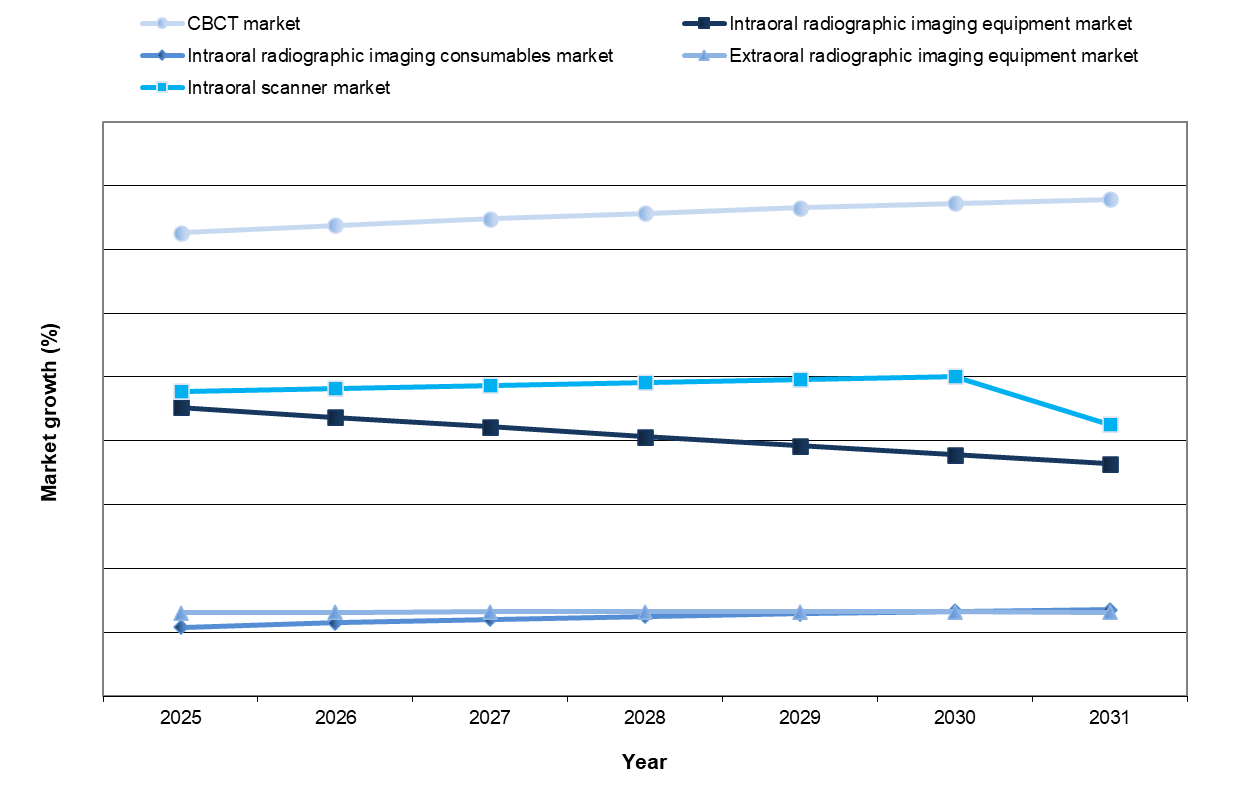
The dental imaging market in the Middle East is poised for continued growth, driven by strong demand for digitisation and modernisation that enhances both diagnostic accuracy and workflow efficiency. AI is set to play a central role in device innovation, from acquisition and reconstruction to diagnosis and workflow orchestration, improving clinical productivity and supporting a more comfortable experience for patients. Combined with the aggressive product development and marketing strategies of major competitors, these technological advances are expected to be key drivers of market growth and transformation in the coming years.



 Brazil / Brasil
 Canada / Canada
 Latin America / Latinoamérica
 USA / USA
 Austria / Österreich
 Bosnia and Herzegovina / Босна и Херцеговина
 Bulgaria / България
 Croatia / Hrvatska
 Czech Republic & Slovakia / Česká republika & Slovensko
 France / France
 Germany / Deutschland
 Greece / ΕΛΛΑΔΑ
 Hungary / Hungary
 Italy / Italia
 Netherlands / Nederland
 Nordic / Nordic
 Poland / Polska
 Portugal / Portugal
 Romania & Moldova / România & Moldova
 Slovenia / Slovenija
 Serbia & Montenegro / Србија и Црна Гора
 Spain / España
 Switzerland / Schweiz
 Turkey / Türkiye
 UK & Ireland / UK & Ireland
 China / 中国
 India / भारत गणराज्य
 Pakistan / Pākistān
 Vietnam / Việt Nam
 ASEAN / ASEAN
 Israel / מְדִינַת יִשְׂרָאֵל
 Algeria, Morocco & Tunisia / الجزائر والمغرب وتونس
 Middle East / Middle East

 Dr. Shizuma ShibataLive webinar
 Dr. Matthias RzeznikRegister now1.5CELive webinar
 Dr. Mona PatelRegister now1CELive webinar

 Prof. Moritz Kebschull, Cat EdneyRegister now1CE







To post a reply please login or register