Dr Paula Matesanz (centre), new president of the Spanish Society of Periodontology and Osseointegration (SEPA) , with other members of the society's newly constituted board at the SEPA Barcelona 2025 Congress. (All images: SEPA)
The appointment of Dr Paula Matesanz, associate professor at the dental school of the Complutense University of Madrid in Spain, as president of the Spanish Society of Periodontology and Osseointegration (SEPA) marks an important moment for the organisation, combining continuity in leadership with a clear commitment to scientific rigour, innovation and inclusivity. As she is only the second woman to lead SEPA in its history, her presidency also reflects a broader evolution within the profession. In the interview that follows, she outlines her vision for the society, the challenges ahead and the strategic priorities that will guide SEPA in the coming years.
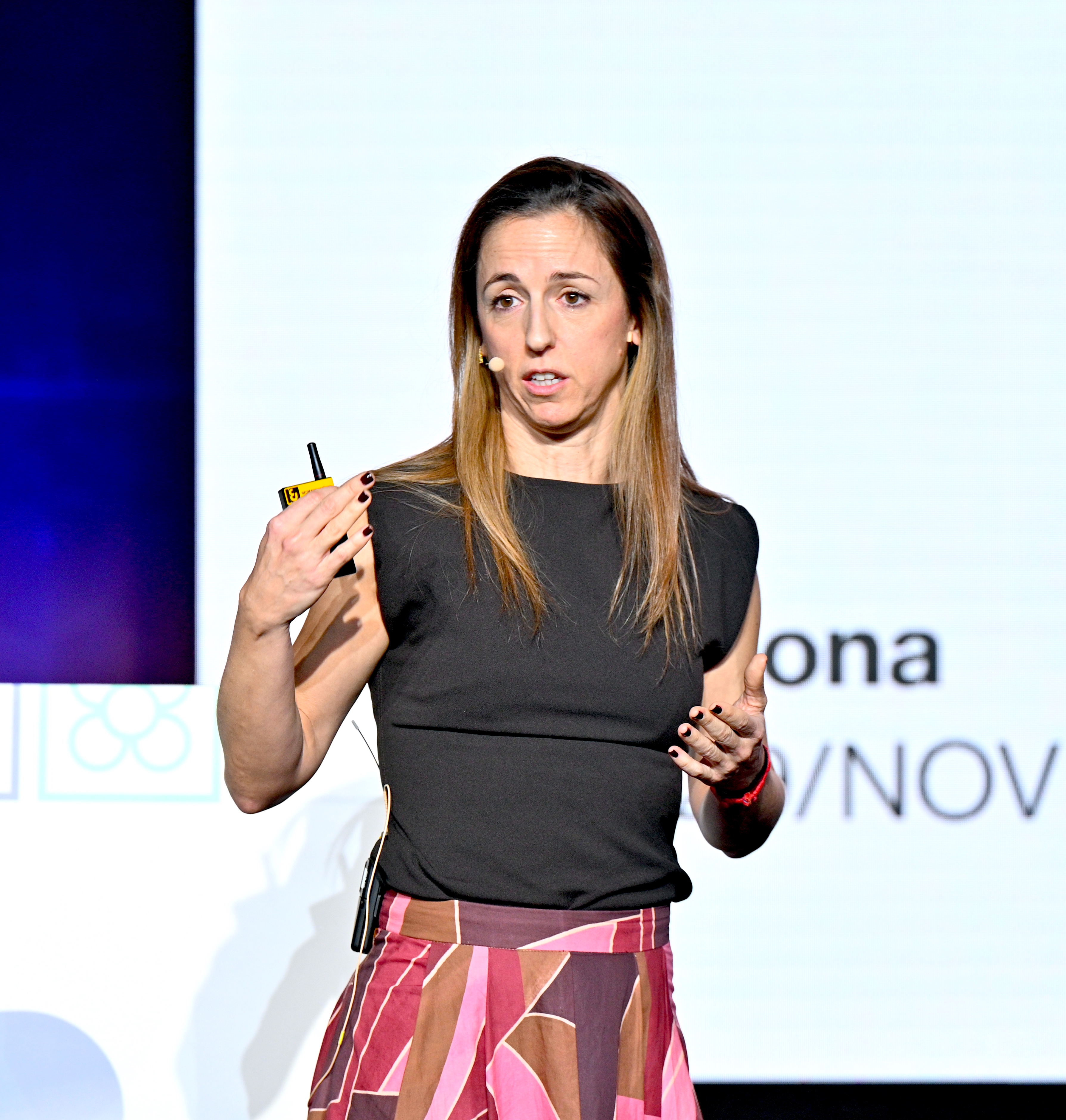
Dr Paula Matesanz, new president of the Spanish Society of Periodontology and Osseointegration (SEPA), has a bold and inclusive vision for the society's future.
Dr Matesanz, what will be your top priority in your first year as SEPA president? Our main objective for the coming years will be to continue along the lines established by previous presidents. Ensuring the stability of the society is a top priority, as is fostering continued development and adaptation to change in cooperation with other global stakeholders.
SEPA’s work during the 2026–2029 period will be structured around four strategic pillars: professional outreach, education and research, public awareness, and congresses and other scientific meetings. Each of these pillars will have specific objectives, all aimed at advancing knowledge in periodontics and implant therapy to guarantee the highest possible quality of care for patients treated in dental clinics by opening SEPA to all professionals interested in improving their scientific knowledge and clinical skills.
How do you plan to strengthen SEPA’s global presence and international collaboration? Strengthening SEPA’s global presence will be a strategic priority during my presidency. We aim to consolidate and expand our collaboration with leading international scientific societies, academic institutions and global organisations in periodontology and implant dentistry. This includes promoting joint scientific initiatives, shared educational programmes and collaborative research projects internationally. At the same time, we want to further position SEPA as an internationally recognised leader by enhancing the global visibility of our congresses, the European Federation of Periodontology’s clinical guidelines as adapted by SEPA and our educational platforms and by actively encouraging the participation of international experts and young professionals. In this regard, I’d like to highlight the strong cooperation between SEPA and the American Academy of Periodontology Foundation to constitute a charitable gift for the creation of an endowment fund dedicated to scientific research in oral and general health, advocacy and educational initiatives, and global public health programmes.
“Strengthening SEPA’s global presence will be a strategic priority during my presidency.”
SEPA has long emphasised diversity and inclusion. How will you build on that within the society? Diversity and inclusion are core values at SEPA and essential drivers of scientific excellence and innovation. Building on these strong foundations, we will continue to promote equal opportunities across genders, generations and professional backgrounds, ensuring that talent and merit are the key criteria for participation and leadership within the society.
We also aim to foster an inclusive environment that encourages the active involvement of young researchers and clinicians from diverse settings, as well as international members. This commitment has long guided SEPA’s work, and it has strengthened our reputation as a dynamic, forward-looking society that reflects the realities of our profession and better serves both our members and patients.
What role do you see for women and young professionals in shaping the future of periodontics? SEPA’s vision is to actively support their development through mentorship, leadership opportunities and access to high-quality education and research networks. By empowering women and the next generation of professionals, we are not only promoting equity but also ensuring a stronger, more dynamic and sustainable future for periodontology.
“Diversity and inclusion are core values at SEPA and essential drivers of scientific excellence and innovation.”
How can SEPA help dental professionals translate scientific advances into everyday clinical practice? One of SEPA’s core goals is to bridge the gap between science and daily clinical practice. We do this by translating high-quality research into evidence-based guidance, through clinical guidelines, consensus documents and practical recommendations that clinicians can readily apply. In addition, our educational programmes, congresses and digital platforms are increasingly focused on interactive, case-based learning that reflects real-world clinical challenges.
BARCELONA, Spain: Periodontal and peri-implant diseases are experiencing a significant increase in Spain. Their prevention and management were central ...
BOSTON, US: Dr Myron Nevins, an internationally respected clinician, academic and leader in periodontology and implantology, died on 24 December 2025 at ...
GUIYANG, China: Severe periodontitis continues to place a growing strain on global oral health. New Global Burden of Disease 2021 data has revealed ...
Education
Live webinar Tue. 31 March 2026 3:00 pm EST (New York)
LEIPZIG, Germany: The fourth quarter of 2025 yielded signs of improvement in the North American dental market, including US distributor giant Henry Schein ...
In an earlier article on this topic,1 I demonstrated the workability of thermo-viscous composites. After warming, the composite can be easily handled for ...



 Brazil / Brasil
 Canada / Canada
 Latin America / Latinoamérica
 USA / USA
 Austria / Österreich
 Bosnia and Herzegovina / Босна и Херцеговина
 Bulgaria / България
 Croatia / Hrvatska
 Czech Republic & Slovakia / Česká republika & Slovensko
 France / France
 Germany / Deutschland
 Greece / ΕΛΛΑΔΑ
 Hungary / Hungary
 Italy / Italia
 Netherlands / Nederland
 Nordic / Nordic
 Poland / Polska
 Portugal / Portugal
 Romania & Moldova / România & Moldova
 Slovenia / Slovenija
 Serbia & Montenegro / Србија и Црна Гора
 Spain / España
 Switzerland / Schweiz
 Turkey / Türkiye
 UK & Ireland / UK & Ireland
 China / 中国
 India / भारत गणराज्य
 Pakistan / Pākistān
 Vietnam / Việt Nam
 ASEAN / ASEAN
 Israel / מְדִינַת יִשְׂרָאֵל
 Algeria, Morocco & Tunisia / الجزائر والمغرب وتونس
 Middle East / Middle East

 Dr. Théo LaplaneRegister now1CELive webinar
 Dr. Shizuma ShibataLive webinar
 Dr. Matthias RzeznikRegister now1.5CELive webinar
 Dr. Mona PatelRegister now1CE














To post a reply please login or register