The DTS software includes tools for preparing printable models, aligner stages, indirect-bonding templates and individual retainers. (All images: Polorto)
CZĘSTOCHOWA, Poland: Digital dentistry is reshaping workflows in diagnosis, treatment planning and appliance production. Tasks that once required laboratory support can increasingly be completed within the dental practice using digital technologies, in-house systems and artificial intelligence (AI). Polorto’s Digital Technical Studio (DTS) is designed to support this shift by facilitating collaboration between dentists and dental technicians and enabling selected production processes to be carried out in the practice.
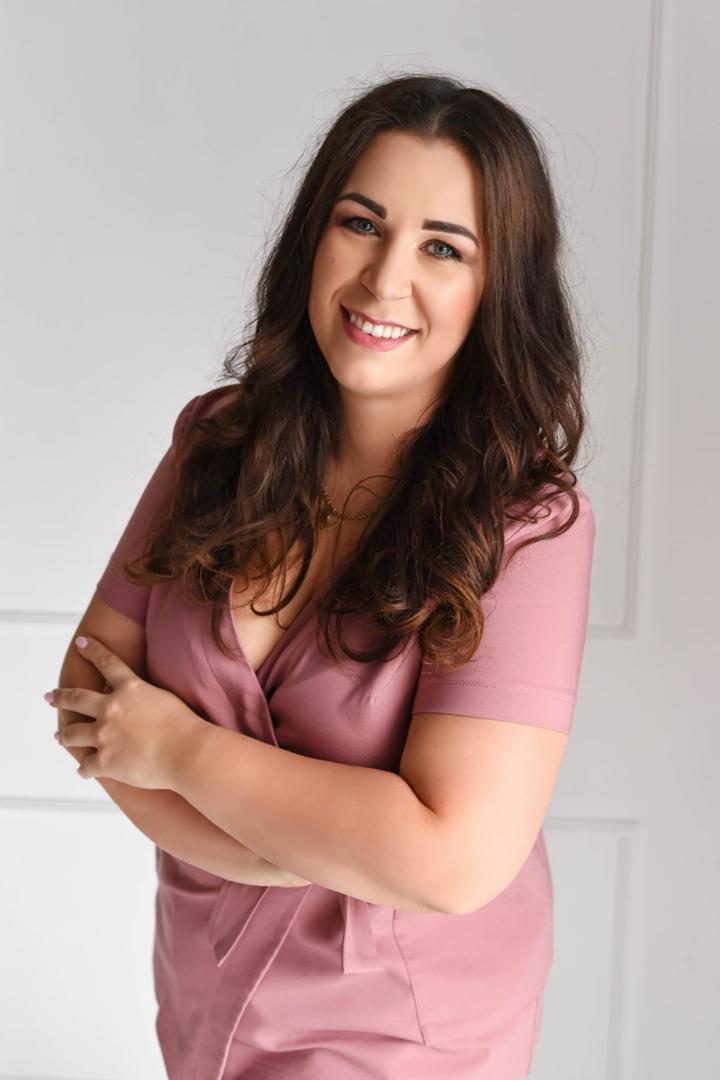
Polish dentist Dr Klaudia Mastalerz described how DTS supports digital workflows in her practice. “As a dentist, I use tools that enhance collaboration with dental technicians and allow me to retain full clinical control. DTS allows for in-office planning and production of orthodontic appliances, accelerating therapy, improving predictability and enabling efficient task delegation within the clinic,” she said.
Dr Klaudia Mastalerz is a dentist from Poland. She specialises in orthodontics, endodontics and aesthetic dentistry.
Changing roles in the digital workflow
The dentist remains responsible for diagnosis, treatment planning and clinical decisions, including those supported by digital tools. However, integrated digital protocols can enable the dentist and other trained members of the practice team to carry out selected tasks that previously required laboratory support. DTS standardises certain technical steps, and the dentist retains responsibility for clinical decisions and supervision.
The dental technician continues to play a key role in areas requiring specialised knowledge, manual expertise and creativity. This expertise remains particularly important in complex or highly individualised cases, including:
designing and producing complex removable appliances;
work requiring precise modelling and fit;
atypical clinical cases requiring interpretation of the treatment design; and
prosthetic work involving multistage processing and high aesthetic precision.
Dentist–technician collaboration
DTS is not intended to remove the dental technician from the treatment process but to support a different model of collaboration. The dentist establishes the treatment concept and therapeutic goals and may prepare an initial digital design or set-up. When laboratory input is required, the dental technician can refine design details, complete the final product and focus on the most complex and time-consuming stages of production.
Shared digital files can simplify communication and make the exchange of information more precise. Standardised workflows may also help reduce communication and production errors and support more predictable treatment processes.
In-practice procedures supported by the digital ecosystem
Used alongside other software within Polorto’s digital ecosystem, including DDP AI and DDP-Ortho, DTS can support a range of procedures within the dental practice. According to Polorto, these workflows can reduce reliance on external laboratory turnaround times and allow selected tasks to be completed during a single appointment. Supported procedures include:
converting intra-oral scan files into diagnostic models and preparing ready-to-print working models;
designing transfer jigs for indirect bracket bonding;
generating series of models for the production of thermoformed orthodontic aligners;
designing individual thermoformed retainers;
planning short finishing series of aligners where clinically indicated; and
creating virtual set-ups as a basis for further treatment planning.
The role of the digital assistant
Such workflows can also create a role for a digital assistant, who may be a trained member of the practice team rather than a dental technician. According to Polorto, delegating appropriate tasks may shorten the practice’s operational cycle, reduce outsourcing costs, free the dentist to focus on clinical and supervisory responsibilities and improve process consistency. Under the dentist’s supervision, the digital assistant can:
follow standardised digital protocols across Polorto’s software ecosystem, including DDP-Ortho, DDP AI, DDS-Pro and Ortonet;
prepare files for 3D printing, indirect-bonding transfer jigs and retainers; and
support the dentist in planning and production workflows.
Potential benefits in clinical practice
DTS is intended to bring selected digital production tasks into the dental practice while retaining the involvement of dental technicians in complex work. According to Polorto, the potential advantages of DTS include:
automation of time-consuming production steps;
simplified in-house procedures supported by defined quality-control protocols;
greater flexibility in adapting workflows to individual cases;
reduced reliance on external laboratories for selected tasks;
greater oversight of materials and treatment progress;
shorter turnaround times for aligners and retainers; and
timely revisions to treatment plans by the dentist based on updated patient data.
As an orthodontist, I derive immense satisfaction from employing cutting-edge technologies that significantly improve treatment efficiency and patient ...
CZĘSTOCHOWA, Poland: Digital transformation in orthodontics is accelerating, and the diagnostic models generated by the orthodontic software DDP AI from ...
Digital orthodontics has witnessed groundbreaking innovation that now enables the in-office design and production of aligners. DDP AI, software developed ...
The method of simultaneous placement of zygomatic implants combined with a Le Fort I osteotomy represents a valuable solution for patients with severe ...
Education
Live webinar Wed. 22 July 2026 1:00 pm EST (New York)
CZĘSTOCHOWA, Poland: Conventional digital orthodontic set-ups often focus primarily on crowns. Although this approach supports aesthetic and occlusal ...
CZĘSTOCHOWA, Poland: Pixel Clinic is a modern dental clinic in Poland with a strong focus on aesthetics and digital workflows. At the clinic, the most ...
Orthodontic appliances are used to reposition teeth by leveraging the natural process of bone remodelling. When force is applied to teeth, it triggers bone ...



 Brazil / Brasil
 Canada / Canada
 Latin America / Latinoamérica
 USA / USA
 Austria / Österreich
 Bosnia and Herzegovina / Босна и Херцеговина
 Bulgaria / България
 Croatia / Hrvatska
 Czech Republic & Slovakia / Česká republika & Slovensko
 France / France
 Germany / Deutschland
 Greece / ΕΛΛΑΔΑ
 Hungary / Hungary
 Italy / Italia
 Netherlands / Nederland
 Nordic / Nordic
 Poland / Polska
 Portugal / Portugal
 Romania & Moldova / România & Moldova
 Slovenia / Slovenija
 Serbia & Montenegro / Србија и Црна Гора
 Spain / España
 Switzerland / Schweiz
 Turkey / Türkiye
 UK & Ireland / UK & Ireland
 China / 中国
 India / भारत गणराज्य
 Pakistan / Pākistān
 Vietnam / Việt Nam
 ASEAN / ASEAN
 Israel / מְדִינַת יִשְׂרָאֵל
 Algeria, Morocco & Tunisia / الجزائر والمغرب وتونس
 Middle East / Middle East


 Dr. Crystal Marruganti, Cat EdneyRegister now1CELive webinar
 Federico ZunicaRegister now1CELive webinar
 Dr. Sergio FlorencioLive webinar
 Dr. Cameron Shahbazian DMD MBARegister now1CE










To post a reply please login or register