In selected cases, a short preliminary decompression phase may help optimise tooth movement before aligner treatment and reduce the need for interproximal reduction. (Image: Rabizo Anatolii/Adobe Stock; clinical images: Drs Luis Carrière and Ana María Cantor)
Although sagittal discrepancy may be minimal in some patients, dental crowding and tight interproximal contacts can significantly compromise the efficiency and predictability of aligner therapy. Tight interproximal contacts increase resistance to tooth movement and reduce the accuracy of programmed aligner movements.
For this reason, in selected cases, an initial phase of interproximal decompression is preferred prior to aligner therapy. This decompression can be achieved biomechanically by generating minimal space and a slight sagittal overcorrection beyond a Class I relationship. This preliminary phase optimises the biomechanical environment for the subsequent aligner stage, improving aligner efficiency and reducing the need for unnecessary interproximal reduction (IPR).
Case description
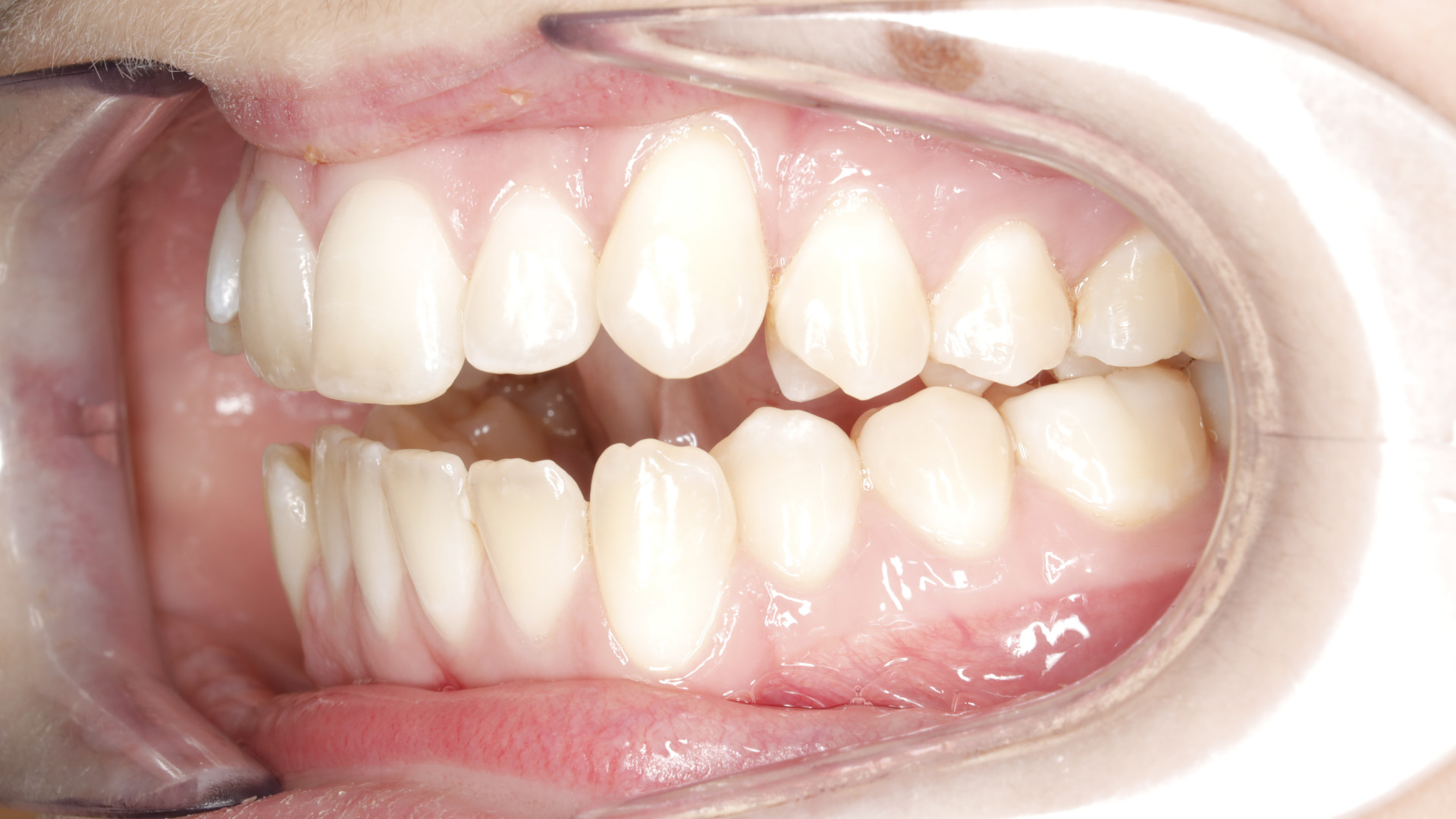
This patient presented with an anterior open bite from canine to canine and with a Class I posterior occlusion at the molar and premolar levels. The lateral incisors were flared, and significant crowding was present in both arches. A mesofacial pattern was observed, together with a well-balanced soft-tissue profile and an adequate relationship between the nose, upper lip, lower lip and chin (Figs. 1a–f). A Bolton discrepancy was present, and the primary treatment objective was the correct closure of the anterior open bite while preserving the dental proportions, specifically the maxillary dental proportions.
Figs. 1a–f: Initial records of the patient.
Fig. 1b
Fig. 1c
Fig. 1d
Fig. 1e
Fig. 1f
Biomechanical considerations in aligner therapy involving crowding
Interproximal space can be created either through IPR or by generating space biomechanically. While IPR is a valid tool, it should be limited strictly to situations in which it represents a true anatomical or proportional necessity, such as inadequate interproximal morphology or genuine tooth size discrepancies. Using IPR merely as a means to enable aligner movement is not biologically ideal. When the primary objective is to improve aligner efficiency, a less invasive and more biologically respectful approach is preferred.
Rationale for a hybrid decompression strategy
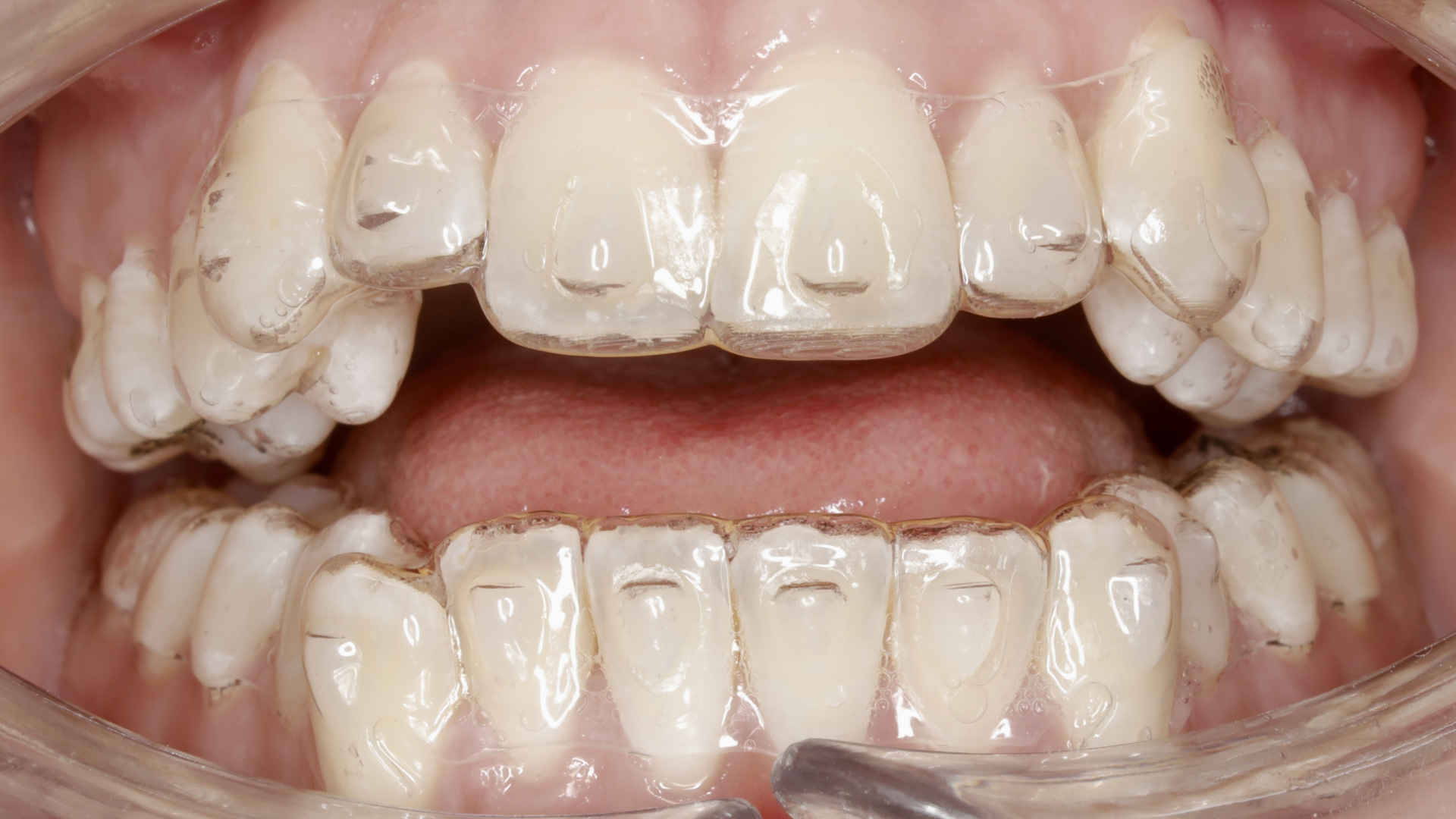
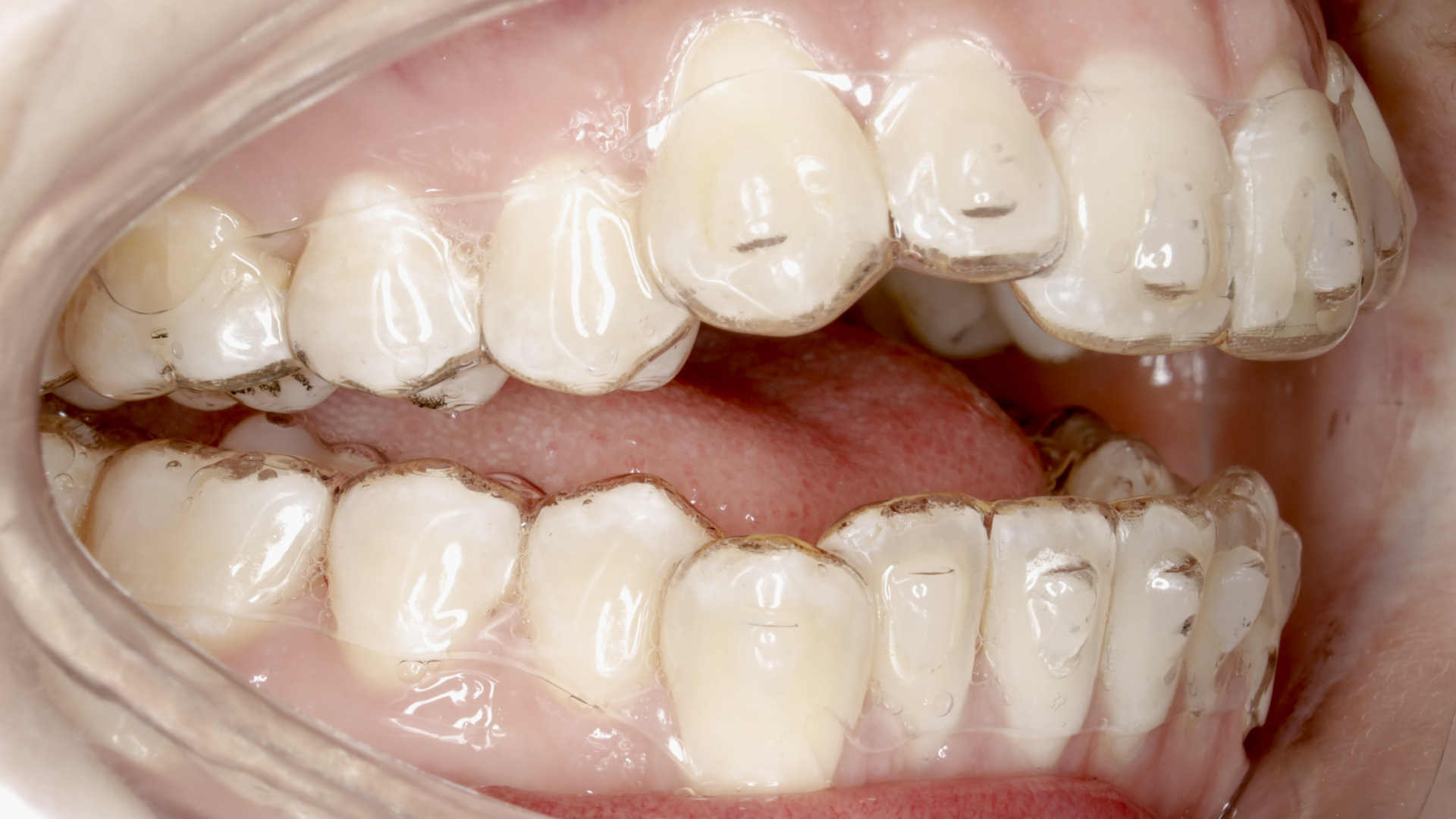
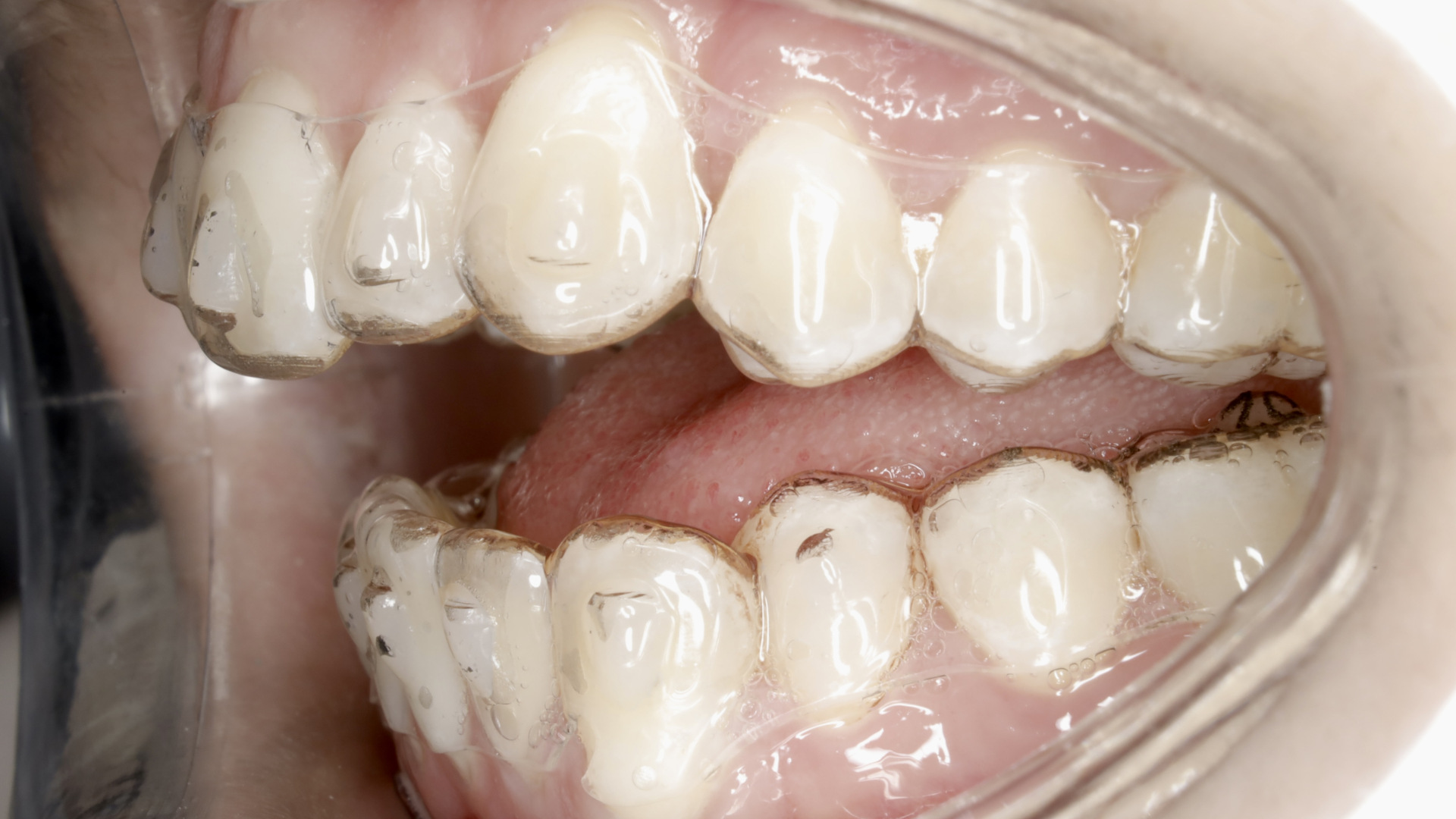
In this case, a hybrid approach using the Carriere Motion Pro Clear appliance (Henry Schein Orthodontics) was selected (Figs. 2a–c). A short preliminary phase was implemented to generate a slight sagittal overcorrection beyond a Class I relationship. This controlled overcorrection produces dentoalveolar decompression, reducing interproximal pressure and facilitating more efficient aligner movements in the subsequent phase.
Figs. 2a–c: Carriere Motion Pro Clear appliance shown from different angles.
Fig. 2b
Fig. 2c
In the mandibular arch, IPR between the mandibular incisors was indicated to compensate for the existing Bolton discrepancy. In contrast, in the maxillary arch—where crowding was associated with flared lateral incisors and where anterior open bite closure was required—IPR was intentionally avoided. Performing IPR in the maxilla would have exacerbated the existing tooth size discrepancy and compromised overall proportional balance. This hybrid strategy allowed space creation without irreversible enamel reduction, preserving maxillary dental proportions while enhancing aligner predictability.
Fig. 3: Initial space creation and decompression of the interproximal pressure following the use of the Carriere Motion Pro Clear and the Hyrax expander.
Treatment protocol
First phase: Sagittal decompression A short Carriere Motion Pro Clear appliance was placed from the maxillary first molar to the first premolar bilaterally for two months. The objective of this phase was not sagittal correction but rather a slight sagittal overcorrection beyond a Class I relationship to decompress tight interproximal contacts and reduce interproximal pressure. Through the appliance, space was created mesial to the premolars and crowding between the incisors was relieved.
Second phase: Transverse development A dentally supported 3D-sintered Hyrax expander was placed for one month. Expansion was performed conservatively. One activation was performed every other day for a total of 15 turns. This limited dentoalveolar expansion was designed to manage transverse space while preserving the patient’s facial balance (Fig. 3).
Figs. 4a–c: Intra-oral photographs illustrating the progress of the aligner treatment during the first set of aligners.
Third phase: Stabilisation and aligner submission Immediately after expansion, the Hyrax was removed and replaced with two passive retainers, worn 24 hours per day except during meals. During this stabilisation period, the case was submitted for the first aligner set. The aligner set-up included attachments on the maxillary and mandibular canines and incisors to support extrusion and rotational control. Additional premolar attachments were prescribed if needed for torque expression, including on the mandibular left premolar.
Biomechanical rationale The combination of a short sagittal decompression phase with controlled transverse expansion generates space mesial to the premolars, facilitating more efficient and predictable canine extrusion during the aligner phase. The strategy prioritises canine-led vertical correction of the anterior open bite, and incisal extrusion follows this guidance. This sequence improves vertical control, enhances predictability and can contribute to better long-term stability of the open bite correction.
Fig. 4b
Aligner treatment objectives
The sagittal objectives of the aligner phase were as follows:
maintain the Class I molar, premolar and canine relationships;
preserve the slight sagittal overcorrection beyond a Class I relationship achieved during the hybrid phase; and
avoid any further sagittal correction.
The transverse objectives were as follows:
achieve controlled dentoalveolar expansion of the maxillary arch;
coordinate expansion of the mandibular arch;
establish an oval or rounded final arch form in
both arches; and
maintain transverse symmetry.
Fig. 4c
The objective of IPR was as follows:
correct the Bolton discrepancy within anatomical limits.
The objectives relating to torque were as follows:
achieve appropriate negative (lingual) torque of the maxillary premolars;
compensate for buccal inclination created by transverse expansion;
improve occlusal settling;
enhance canine-guided vertical mechanics; and
maintain incisor torque control during extrusion.
The vertical objectives were as follows:
close the anterior open bite through controlled extrusion;
prioritise canine-led extrusion, followed by maxillary incisor extrusion;
achieve greater extrusion of the central incisors than of the lateral incisors;
re-establish an ideal smile arch curvature;
harmonise the incisal edge position with the lower lip during smiling; and
maintain controlled and sequential vertical correction.
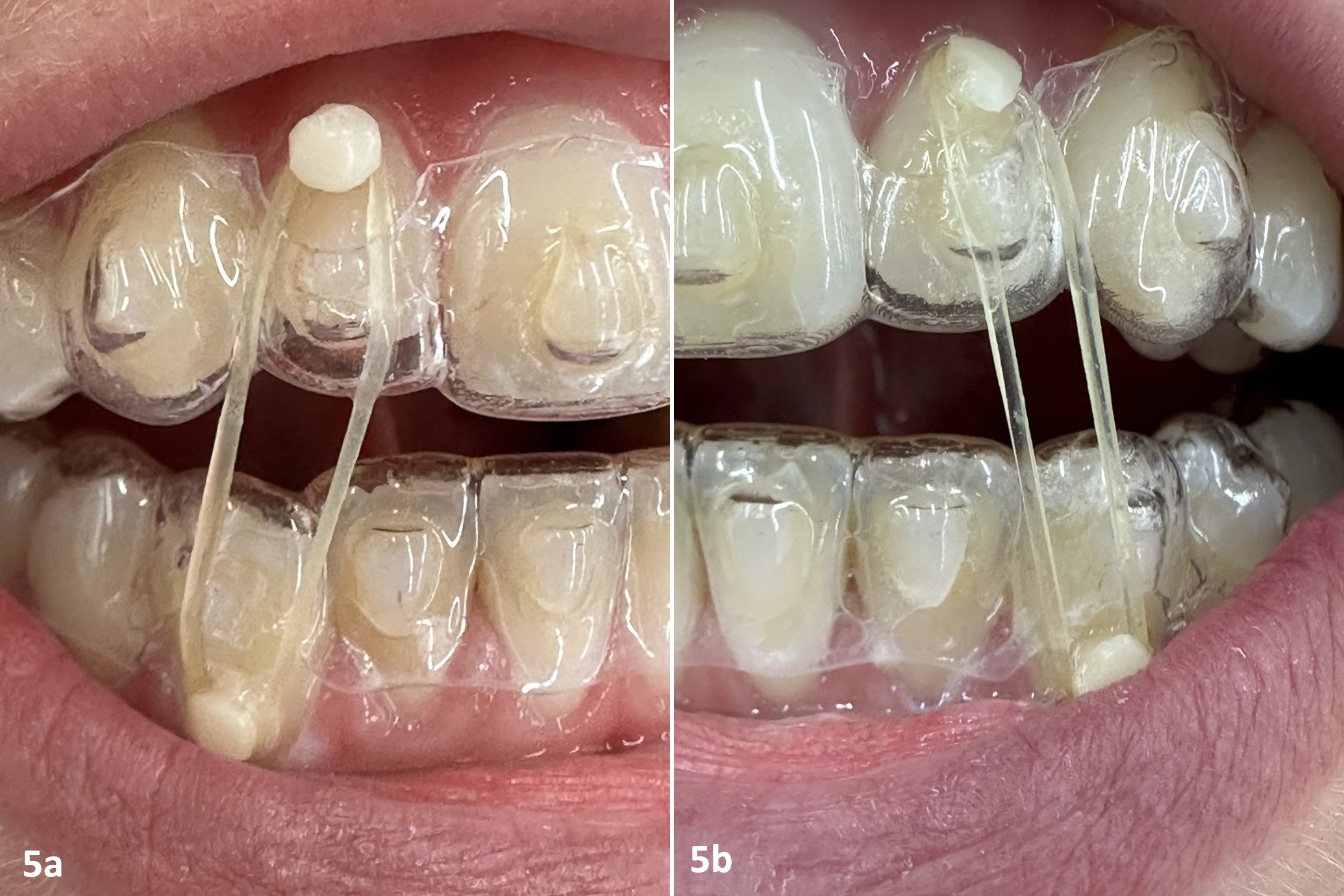
Figs. 5a & b: Adjustment of the traction of the maxillary lateral incisors and mandibular canines and repositioning using bonded buttons and windows opened in the aligners for the use of vertical elastics, allowing the teeth to recover their position within the aligner slot and enabling continuation with the subsequent aligners with proper aligner fit.
The objectives relating to 3D control were as follows:
achieve controlled extrusion;
prevent unwanted tipping; and
maintain torque and rotational control.
Aligner therapy and refinement
Maxillary and mandibular aligners (a total of 31) Smilers Expert were required for the first aligner set (Figs. 4a–c). After completion of this phase, a residual anterior open bite persisted, and the lateral incisors did not fully express the planned extrusion and did not track properly with the aligners. To address this limitation, windows were cut into the aligners, and composite buttons were placed on the lateral incisors (Figs. 5a & b). Vertical elastics were then applied using the final modified aligner of the first set to achieve controlled extrusion and proper vertical settling of the lateral incisors. In aligner therapy, biomechanical synergy is essential to achieve predictable and efficient tooth movement. When planning incisor extrusion to close an anterior open bite, it is not sufficient to rely solely on the use of auxiliaries to improve efficiency. In addition to incisor extrusion, slight or controlled posterior intrusion should be incorporated simultaneously. Introducing an intrusive component in the posterior segment enhances vertical control and significantly increases the predictability of the overall movement. The desired vertical correction was achieved within two months of elastic wear. The patient was then rescanned, and two vacuum-formed retainers were fabricated. A second refinement phase was subsequently initiated (consisting of 11 additional aligners), allowing precise finishing of the case (Figs. 6a–f).
Figs. 6a–f: Final records after completion of treatment.
Fig. 6b
Fig. 6c
Fig. 6d
Fig. 6e
Fig. 6f
Conclusion
IPR should be considered carefully, as it is an invasive and irreversible procedure and is not always necessary to achieve efficient aligner treatment. In many cases, IPR is used merely to overcome biomechanical limitations rather than to address true anatomical or proportional discrepancies. Today, hybrid orthodontic treatment is a clinical reality in aligner therapy. The combination of auxiliary appliances with aligners allows controlled decompression of the dentition and release of interproximal pressure before the aligner phase. This strategy can reduce or even eliminate the need for more invasive procedures such as IPR. Achieving adequate space through biomechanical means, rather than through enamel reduction, is often beneficial for both the patient and the overall quality, efficiency and predictability of the final treatment outcome.
Clear aligners are not always a perfect alternative to conventional orthodontic appliances.1–4 Although theoretically it is possible to achieve good ...
Traditionally, anterior open bites have been considered one of the most challenging malocclusions to treat in orthodontics. In fact, the majority of such ...
BARKING, England: Queen Mary University of London, in partnership with the London Borough of Barking and Dagenham Council, has announced the opening of a ...
PHOENIX, US: As more practices bring 3D printing in-house, understanding how technical settings affect both accuracy and turnaround time is becoming a ...
ISTANBUL, Turkey: As an exhibitor at this year’s FDI World Dental Congress, Solventum offers dental professionals an exciting opportunity to explore their...
Dental technicians have so many different restorative materials and design and finishing concepts available to them that it can seem difficult to select the...
PATERNA, Spain: Graphenano Dental is part of the Graphenano group of companies, dedicated to incorporating graphene into numerous applications and a leader ...
The introduction of new-generation composites, with high nano-filler loading, has opened doors to new techniques for managing direct and semi-direct ...



 Brazil / Brasil
 Canada / Canada
 Latin America / Latinoamérica
 USA / USA
 Austria / Österreich
 Bosnia and Herzegovina / Босна и Херцеговина
 Bulgaria / България
 Croatia / Hrvatska
 Czech Republic & Slovakia / Česká republika & Slovensko
 France / France
 Germany / Deutschland
 Greece / ΕΛΛΑΔΑ
 Hungary / Hungary
 Italy / Italia
 Netherlands / Nederland
 Nordic / Nordic
 Poland / Polska
 Portugal / Portugal
 Romania & Moldova / România & Moldova
 Slovenia / Slovenija
 Serbia & Montenegro / Србија и Црна Гора
 Spain / España
 Switzerland / Schweiz
 Turkey / Türkiye
 UK & Ireland / UK & Ireland
 China / 中国
 India / भारत गणराज्य
 Pakistan / Pākistān
 Vietnam / Việt Nam
 ASEAN / ASEAN
 Israel / מְדִינַת יִשְׂרָאֵל
 Algeria, Morocco & Tunisia / الجزائر والمغرب وتونس
 Middle East / Middle East

 Prof. Aylin Baysan BDS MSc PhD MFDS RCSEd MEndo RCSEd FDTFEd FDS RCSEng PHEAWatch recording1CELive webinar
 Prof. Dr. Gustavo De-DeusLive webinar
 Dr. Dimple DesaiRegister now1CELive webinar
 Dr. Ahmed Elmoghazy











To post a reply please login or register