At the sixth GC International Dental Symposium in October in Japan, experts will discuss how digital diagnosis, planning and design support optimal clinical outcomes. (Image: anatoliy_gleb/Adobe Stock)
At the sixth GC International Dental Symposium, set for 3 and 4 October in Tokyo in Japan, two of the programme’s digital dentistry sessions will address how digital diagnosis, planning and design are translated into clinical outcomes, focusing on validated digital workflows. Prof. Reinhilde Jacobs of KU Leuven in Belgium, president of the Digital Dentistry Society, will contribute to sessions on the use of artificial intelligence in diagnosis, smart personalised treatment and digital prosthodontics. In the build-up to the event, Prof. Jacobs spoke with Dental Tribune International about workflow validation, accuracy control and the points at which digital workflows are most vulnerable to error.
Prof. Jacobs, what defines a truly validated digital workflow from diagnosis to restoration? Validating a digital workflow involves a high-level, hybrid scientific verification of all stages of the workflow. This includes a clinical validation trial that tests the complete workflow against a clinical expert benchmark. Validation of a workflow in this way helps ensure that cumulative errors across image data acquisition, software design and fabrication consistently remain below a critical clinical failure threshold.
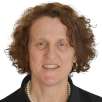
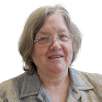
Prof. Reinhilde Jacobs is head of oral and maxillo-facial surgery at KU Leuven in Belgium and president of the Digital Dentistry Society. (Image: Prof. Reinhilde Jacobs)
Why is clinical validation necessary in addition to technical validation? Digital workflows for dental implant placement are a primary example of the importance of clinical as well as technical validation. These workflows were introduced some three decades ago, and several hundred validation studies were conducted both before and after their introduction. The vast majority of these studies were technical in nature, whether in vitro or ex vivo. The advantage of these studies is that they can clearly isolate error margins at individual steps in the workflow; however, they cannot be directly translated into potential biological margins in a clinical setting. By contrast, clinical validation studies reflect the net cumulative effect of positive and negative errors across the workflow.
Opposing errors may sometimes balance out, resulting in compensatory cumulative error. The opposite may also occur: when unvalidated components are combined within a digital workflow, errors that have not been measured or accounted for may compound rather than cancel each other out. Therefore, scientific validation of digital workflows requires strict accuracy control across all stages—acquisition, planning, design, fabrication and treatment—as well as clinical validation of the final outcome, including cumulative error, against a clinical expert benchmark.
Where do errors most commonly arise as digital data is captured, processed and translated into fabricated restorations, and how can they be avoided? Errors occur primarily during acquisition of the image data and secondarily during fabrication. Accuracy at the primary acquisition stage and any related errors may further limit the accuracy of subsequent fabrication. Even if fabrication could be delivered with micrometre precision, the accuracy of the fabricated product will be determined by the acquisition accuracy. Although technical validation studies of intra-oral scanners in laboratory environments often indicate very high precision, this accuracy can very often not be maintained in clinical settings. In such settings, errors may accumulate, especially in posterior, subgingival or interproximal areas. Thus, if this initial data is compromised, subsequent CAD/CAM processing may simply replicate the original inaccurate digital model, albeit precisely.
Editorial note:
Organised by GC Corp., the sixth GC International Dental Symposium will bring together international speakers and dental professionals for a multidisciplinary programme covering topics such as prosthodontics, implantology, dental materials, endodontics, aligner therapy and digital workflows. The event is being held as part of GC’s broader One Week of Excellence programme, which will feature additional networking opportunities and organised cultural tours. More information is available on the symposium website.
TOKYO, Japan: Innovation in dentistry is often discussed in terms of new products; however, its clinical significance lies in how materials and technologies...
TOKYO, Japan: Predictable, aesthetic and minimally invasive restorative dentistry will be a prominent theme at the sixth GC International Dental Symposium, ...
TOKYO, Japan: Set for 3 and 4 October in Tokyo, the sixth GC International Dental Symposium will bring together general practitioners, specialists, dental ...
On 3 and 4 October, dental professionals from around the world will gather in Tokyo in Japan for the sixth GC International Dental Symposium. Organised as ...
SEOUL, South Korea: In June, dental professionals from across Europe visited Seoul to attend the 2026 Osstem Europe Tour Seminar. Organised by Osstem ...
MUNICH, Germany: Clinical practice, research and education often require specialised software tools that are too niche for commercial vendors or are not ...
PIRACICABA, Brazil: In implant prosthodontics, the growing body of research that clinicians must navigate raises the possibility of using large language ...
Education
Live webinar Thu. 5 November 2026 1:00 pm EST (New York)
TOKYO, Japan: Innovation in dentistry must also support prevention, public health and professional leadership. At the sixth GC International Dental ...
LEUVEN, Belgium: KU Leuven and GC Europe have renewed the Toshio Nakao Chair for Adhesive Dentistry for 2026–2030. The chair is one of the oldest endowed ...
LUCERNE, Switzerland: Minimum intervention oral care (MIOC) represents a shift from a predominantly operative and procedure-centred model towards a ...



 Brazil / Brasil
 Canada / Canada
 Latin America / Latinoamérica
 USA / USA
 Austria / Österreich
 Bosnia and Herzegovina / Босна и Херцеговина
 Bulgaria / България
 Croatia / Hrvatska
 Czech Republic & Slovakia / Česká republika & Slovensko
 France / France
 Germany / Deutschland
 Greece / ΕΛΛΑΔΑ
 Hungary / Hungary
 Italy / Italia
 Netherlands / Nederland
 Nordic / Nordic
 Poland / Polska
 Portugal / Portugal
 Romania & Moldova / România & Moldova
 Slovenia / Slovenija
 Serbia & Montenegro / Србија и Црна Гора
 Spain / España
 Switzerland / Schweiz
 Turkey / Türkiye
 UK & Ireland / UK & Ireland
 China / 中国
 India / भारत गणराज्य
 Pakistan / Pākistān
 Vietnam / Việt Nam
 ASEAN / ASEAN
 Israel / מְדִינַת יִשְׂרָאֵל
 Algeria, Morocco & Tunisia / الجزائر والمغرب وتونس
 Middle East / Middle East
 Dr. Steven VorholtRegister now1.5CELive webinar
 Dr. Mona EideLive webinar
 Prof. Dr. Erhan Dursun DDS PhDRegister now1CELive webinar
 Dr. Dhiraj Arora BDS MJDF RCS(Eng) MSc(Endo) PGCert CERegister now1CE











To post a reply please login or register