Polorto’s smart crown–root set-up combines CBCT data and AI-assisted segmentation to support anatomically informed orthodontic treatment planning within familiar digital workflows. (All images: Polorto)
CZĘSTOCHOWA, Poland: Conventional digital orthodontic set-ups often focus primarily on crowns. Although this approach supports aesthetic and occlusal planning, it provides limited information about root position and the surrounding bone. According to Polorto, integrating CBCT data and artificial intelligence (AI)-assisted analysis into digital treatment planning can help clinicians take root anatomy, bone boundaries and other anatomical structures into account when planning selected orthodontic and interdisciplinary cases.
Polorto’s smart crown–root set-up, based on CBCT data and AI-assisted segmentation, has been developed to support more anatomically informed orthodontic treatment planning. According to the company, integration with the DDP-Ortho, DDP AI and DDS-Pro software provides clinicians and technicians with additional diagnostic and therapeutic possibilities while preserving familiar digital tools. This approach can support treatment predictability and help clinicians tailor planning more closely to the patient’s individual anatomy.
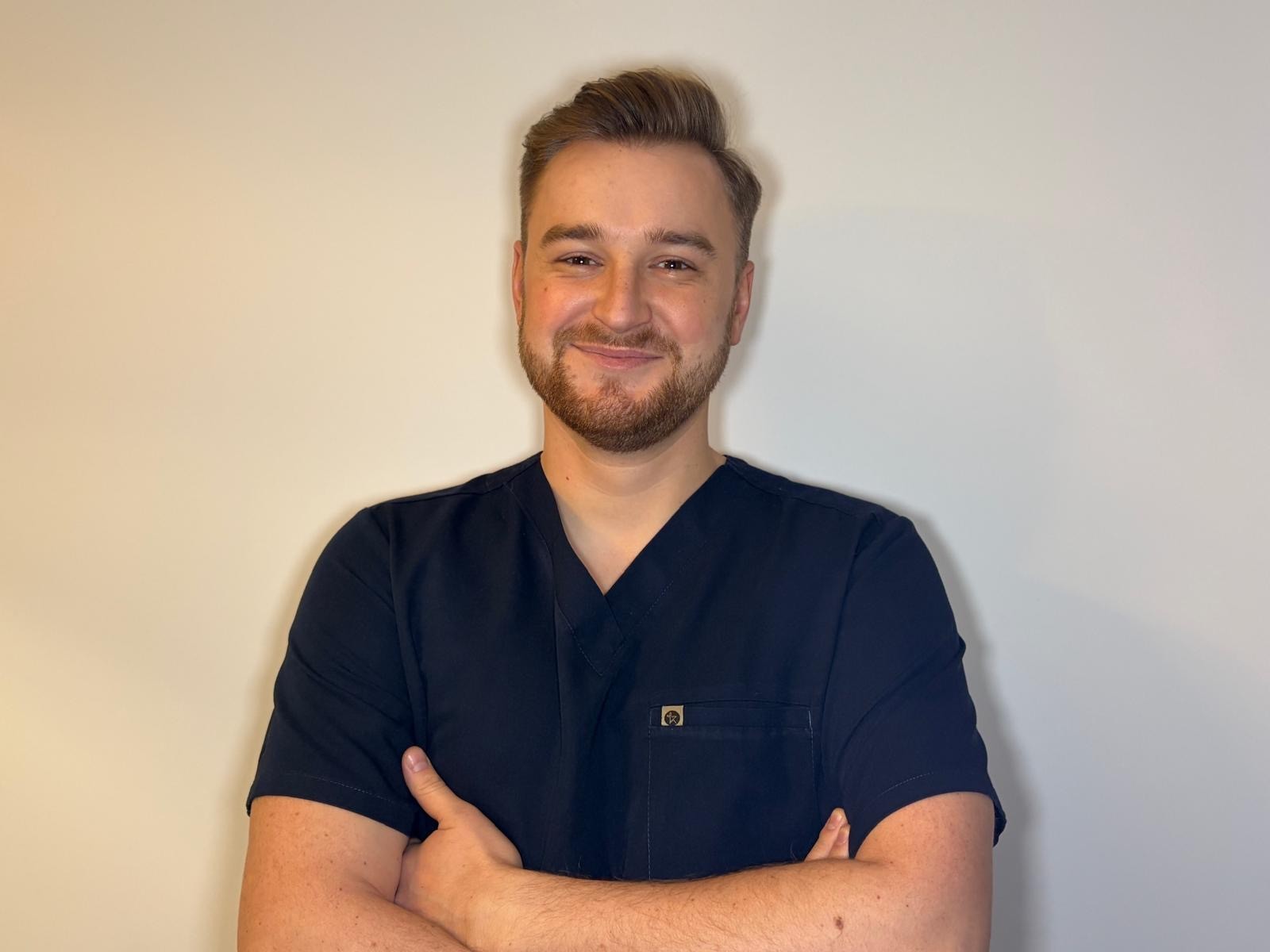
Polish dentist Dr Szymon Budziński emphasised the importance of combining aesthetic planning with anatomical information. “As a dentist practising orthodontics, patient safety and predictability of tooth movement are my top priorities. The smart crown–root set-up, supported by AI and integrated with CBCT data, provides full visualisation of crowns and roots, enabling treatment planning that is both aesthetically pleasing and biologically safe,” he said.
Dr Szymon Budziński, a Polish dentist practising orthodontics, focuses on treatment predictability, tooth movement and the role of anatomical data in digital orthodontic planning.
From crown set-up to crown–root set-up
Conventional treatment planning focuses mainly on crowns, allowing aesthetic and occlusal alignment but offering limited information about root behaviour. The smart crown–root set-up includes:
teeth with roots;
maxillary and mandibular outlines;
root-to-bone relationships;
simulated root positions during treatment;
mandibular nerve tracking;
panoramic curve analysis; and
automated occlusal design based on Andrews’ six elements and six keys.
According to Polorto, this enables planning to be guided not only by the visible crown position but also by relevant anatomical structures. The company’s aim is to make digital orthodontic planning more biologically informed, particularly in cases in which root position and bone boundaries are clinically relevant.
The role of CBCT and AI
CBCT data processed with AI-assisted tools can support the visualisation of teeth, roots and jaw bones. When integrated into DDP-Ortho or DDS-Pro, this information allows clinicians to assess crown and root movement in relation to the surrounding anatomy. This can support movement planning in cases in which root position, bone boundaries or interdisciplinary treatment considerations are clinically relevant.
Root control as a factor in risk-aware planning
Limited root monitoring can make it more difficult to identify potential risks such as root resorption, fenestration, root collisions, delayed treatment progression or tissue overload. This is particularly relevant in cases involving large tooth movements, expansion therapy, incisor retraction, aligner treatment in complex anatomical situations, implant planning or interdisciplinary treatment. The crown–root set-up is designed to support:
initial root position analysis;
identification of possible collisions and risk zones;
evaluation of planned movements;
reduction of unnecessary stress on roots and periodontal tissues;
modification of the treatment plan based on movement, speed and occlusion; and
optimisation of aligner movement and interproximal reduction planning.
Optimising treatment planning
Access to full anatomical data can help clinicians select biomechanically appropriate movement paths, avoid movements or implant positions that may increase risk, and balance aesthetic goals with tissue stability. In selected cases, this may help reduce the need for corrective interventions and support a more controlled treatment workflow.
Importance for aligner therapy
Aligner therapy requires precise planning because tooth movements are staged sequentially. According to Polorto, the smart crown–root set-up adds root and bone information to the planning process, helping clinicians move beyond crown-only visualisation and towards more anatomically informed aligner treatment planning.
Further information about Polorto’s digital planning solutions is available on the company’s website. The website provides additional details on DDP-Ortho, DDP AI and DDS-Pro.
The aim of orthodontic diagnosis is to identify dento-alveolar, skeletal and functional alterations in the maxillo-facial complex. Diagnosis and treatment ...
KUALA LUMPUR, Malaysia/DUBLIN, Ireland: Some terms used to describe root and canal anatomy are defined inconsistently in the literature, and the same ...
Root-canal anatomy with all of its inherent complexity still represents a very serious challenge to modern root-canal therapy. Even with many breakthroughs ...
Patients often present to the dental office asking how long it will take to complete a full-mouth dental implant rehabilitation from start to finish. ...
HEIDELBERG, Germany: When a patient requires orthodontic treatment, it is common practice to capture the dental malposition with a radiograph. Scientists ...
NEWPORT, Wales: Organised by the British Orthodontic Society, the 2025 British Orthodontic Conference (BOC) promises to bring together the entire UK ...
Guided surgery has been around for a long time. However, very few dentists in the UK place implants using surgical guides. The reasons for this are ...
Education
Live webinar Wed. 21 October 2026 11:00 am EST (New York)
ASTANA, Kazakhstan: In September, MegaGen hosted the 2026 Eurasia Scientific Meeting in Astana, convening around 230 dental professionals from Kazakhstan ...
LONDON, England: In the literature on 3D-printed orthodontic appliances, laboratory, ageing and safety findings are often discussed as though they carry the...
LONDON, England: Although tissue-level implants can achieve satisfactory aesthetic outcomes, their use in anterior restorations continues to be debated ...



 Brazil / Brasil
 Canada / Canada
 Latin America / Latinoamérica
 USA / USA
 Austria / Österreich
 Bosnia and Herzegovina / Босна и Херцеговина
 Bulgaria / България
 Croatia / Hrvatska
 Czech Republic & Slovakia / Česká republika & Slovensko
 France / France
 Germany / Deutschland
 Greece / ΕΛΛΑΔΑ
 Hungary / Hungary
 Italy / Italia
 Netherlands / Nederland
 Nordic / Nordic
 Poland / Polska
 Portugal / Portugal
 Romania & Moldova / România & Moldova
 Slovenia / Slovenija
 Serbia & Montenegro / Србија и Црна Гора
 Spain / España
 Switzerland / Schweiz
 Turkey / Türkiye
 UK & Ireland / UK & Ireland
 China / 中国
 India / भारत गणराज्य
 Pakistan / Pākistān
 Vietnam / Việt Nam
 ASEAN / ASEAN
 Israel / מְדִינַת יִשְׂרָאֵל
 Algeria, Morocco & Tunisia / الجزائر والمغرب وتونس
 Middle East / Middle East

 Prof. Dr. Gustavo De-DeusLive webinar
 Dr. Dimple DesaiRegister now1CELive webinar
 Dr. Ahmed ElmoghazyLive webinar
 Dr. Gil Asafrana D.M.D, B.M.ScRegister now1CE
















To post a reply please login or register