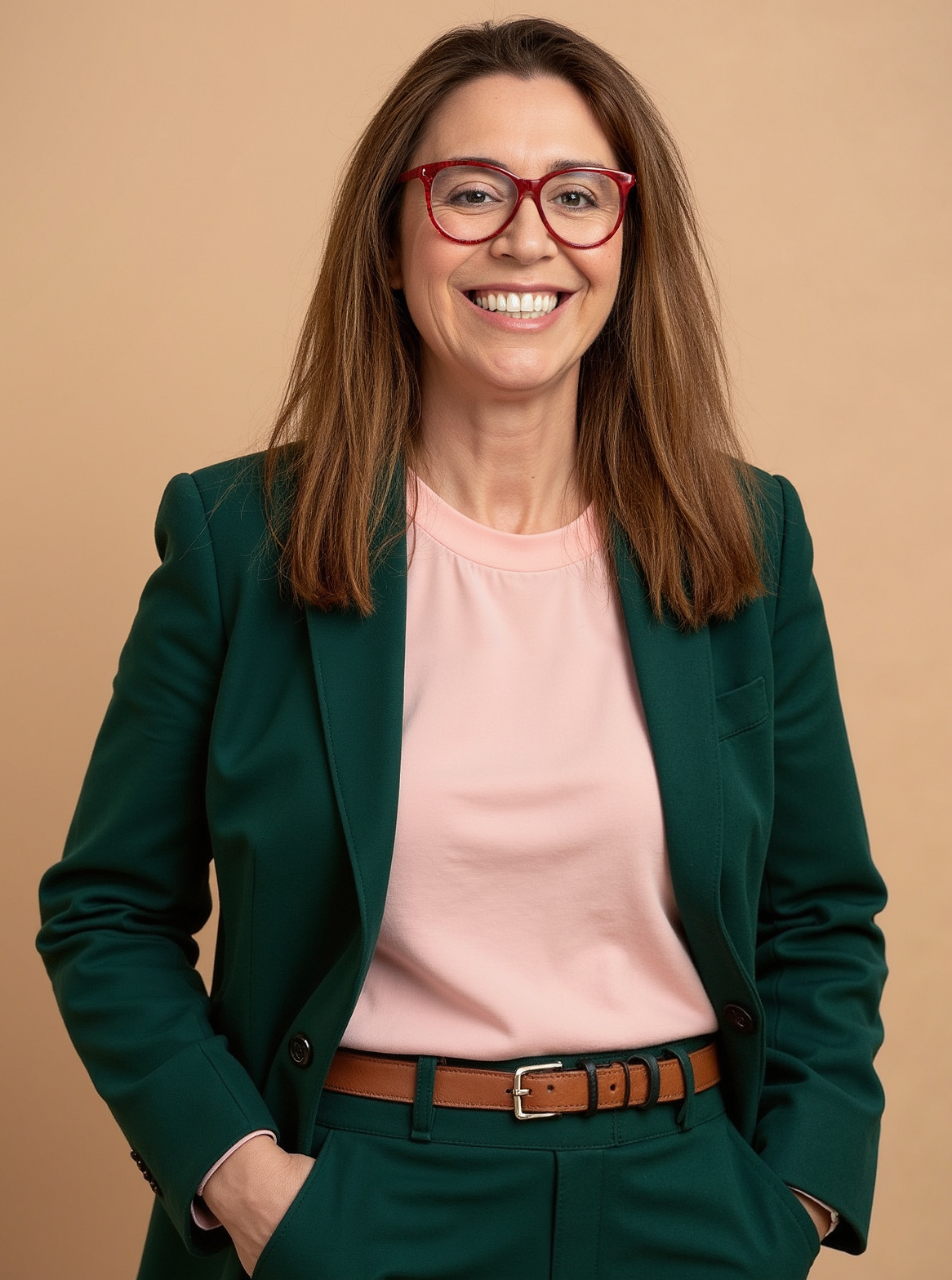
You work directly with patients and also test materials and refine workflows in clinical settings. What practical advice would you give technicians and clinicians when choosing materials for digital removable prostheses?
Because my work spans both patient care and technical production, I probably have more freedom to experiment with materials and workflows than someone who is only sending work to a laboratory. My curiosity and willingness to test different approaches allows me to refine procedures directly in clinical situations.
The advice I would give both technicians and clinicians is to step back and evaluate the case carefully before deciding on the design or workflow. First, think about the type of prosthesis you want to provide for that specific patient. Then consider which materials and production methods will give you the best long-term function, aesthetics and durability.
“My curiosity and willingness to test different approaches allows me to refine procedures directly in clinical situations.”
Material selection should always be guided by the clinical situation rather than simply choosing what is most familiar. When you take the time to evaluate all the available options first, you can create a far better long-term result for the patient.
Many technicians specialising in crown and bridge work have been hesitant to move into removable prosthetic work. What would you say to those who may not yet recognise the potential of digital removable prostheses?
I really want to encourage technicians to look at the profession as a whole rather than focusing too narrowly on one specialty area. Of course, nobody can master every single discipline completely, but understanding different areas of prosthetic work helps us deliver more comprehensive treatment overall.
Digital tools have made removable prostheses far easier to fabricate than they were in the analogue era. The software simplifies many of the complicated manual processes that used to make removable prostheses feel intimidating. The workflow is now more streamlined, faster and far more efficient. There’s also still a huge demand for removable prostheses. Patients continue to need these solutions, and digital workflows have made them much more profitable because production time has been reduced so dramatically.
In my presentation, I showed a partial denture case that incorporated individual crowns. Cases like that still require strong skills in crowns and bridges, but they also demonstrate how digital removable prostheses can deliver highly aesthetic and natural-looking outcomes. I would tell technicians not to overlook this area of dental technology. The tools are already here, the materials are excellent, and digital removable prostheses can be every bit as sophisticated and rewarding as ceramic work.
At exocad Insights, what key message are you hoping attendees will take away from your session?
I hope that attendees will leave with the understanding that digital dentistry has removed much of the complexity from removable prosthetic workflows that were once considered extremely difficult. Digital workflows now allow clinics and laboratories to transfer information much more efficiently and accurately. At the same time, many of the trusted principles and techniques from analogue dentistry can still be carried over into digital workflows successfully.
What digital systems really do is reduce the amount of time needed to produce high-quality work. Digital workflows help clinicians and technicians move beyond merely reaching an acceptable standard by making it easier to deliver a higher level of quality, precision and predictability for patients.



 Brazil / Brasil
 Canada / Canada
 Latin America / Latinoamérica
 USA / USA
 Austria / Österreich
 Bosnia and Herzegovina / Босна и Херцеговина
 Bulgaria / България
 Croatia / Hrvatska
 Czech Republic & Slovakia / Česká republika & Slovensko
 France / France
 Germany / Deutschland
 Greece / ΕΛΛΑΔΑ
 Hungary / Hungary
 Italy / Italia
 Netherlands / Nederland
 Nordic / Nordic
 Poland / Polska
 Portugal / Portugal
 Romania & Moldova / România & Moldova
 Slovenia / Slovenija
 Serbia & Montenegro / Србија и Црна Гора
 Spain / España
 Switzerland / Schweiz
 Turkey / Türkiye
 UK & Ireland / UK & Ireland
 China / 中国
 India / भारत गणराज्य
 Pakistan / Pākistān
 Vietnam / Việt Nam
 ASEAN / ASEAN
 Israel / מְדִינַת יִשְׂרָאֵל
 Algeria, Morocco & Tunisia / الجزائر والمغرب وتونس
 Middle East / Middle East


 Dr. Pierre Marin, Dr. Antoine PopelutRegister now1CELive webinar
 Dr. Sinan GhishanRegister now1CELive webinar
 Dr. Sonia PresenciaLive webinar
 Dr. John Tsourounakis DDS, Cert. Perio, MS, FRCD(C)Register now1CE












To post a reply please login or register